Uveitis
Learn about uveitis symptoms, causes, diagnosis, and treatment options for inflammation inside the eye.
Overview
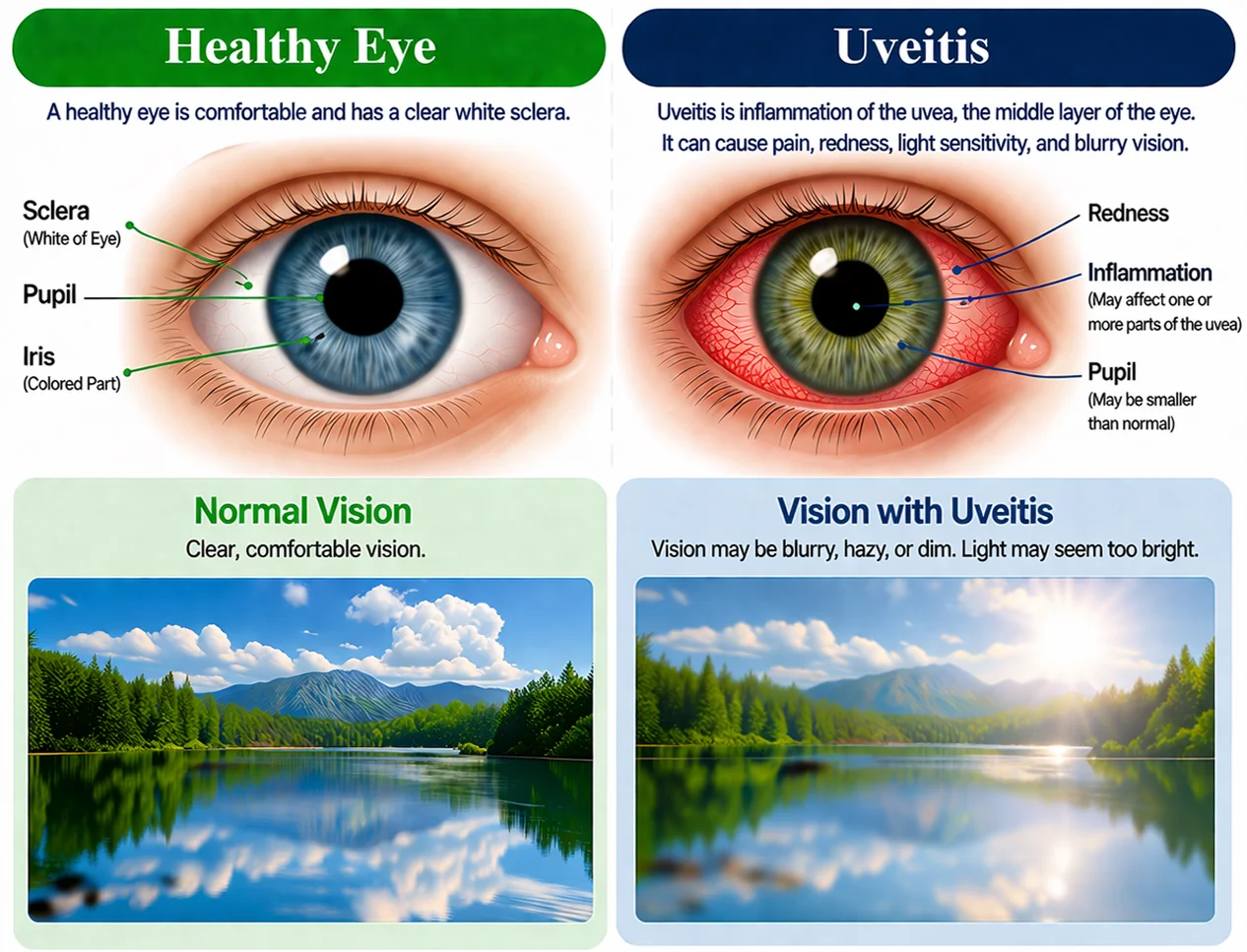
Uveitis is an inflammation of the uvea, the middle layer of the eye. The uvea includes the iris, ciliary body, and choroid, and it sits between the retina and the sclera, the white part of the eye. Because the uvea contains many veins and arteries that help supply the eye, inflammation in this area can affect both comfort and vision. Uveitis may involve one eye or both eyes, and symptoms can come on suddenly or more gradually depending on the type and the cause.
Learn more about Uveitis
Do I have Uveitis ?
Uveitis can affect one eye or both eyes, and symptoms may appear quickly or gradually depending on the type and cause.
Symptoms of Uveitis
Symptoms can include, but are not limited to:
Blurry vision
Inflammation inside the eye can make vision look cloudy, soft, or less sharp than normal.
Eye pain and redness
The eye may become painful, irritated, and visibly red as the inflammation increases.
Floaters and light sensitivity
You may notice floaters and increased sensitivity to bright light in the affected eye.
Treatment of Uveitis
Treatment depends on the type of uveitis and its underlying cause:
Steroid drops, pills, or injections
Most cases are treated with steroids to reduce inflammation in the eye.
Dark glasses and comfort care
Dark glasses may be recommended to shield the eyes from light and improve comfort.
Antibiotics or surgery in severe cases
If infection is involved, antibiotics and anti-inflammatory medication may be needed, and severe cases may require vitrectomy surgery.

Whether you need a routine eye exam, upadet glasses or contacts, or help with an eye concert, our fiendly team is here to make the process easy.
- Personalized Care
- States-f-the-Art Equipment
- Experienced Optometrists
- Family-Friendly Environment

What causes Uveitis?
Uveitis can be caused by several different problems. It may present with viral, bacterial, parasitic, or fungal infection. Other causes can include autoimmune disorders, inflammation elsewhere in the body, trauma to the eye, or even cancer. Because there are so many possible causes, diagnosing the specific type of uveitis is an important part of finding the right treatment plan.
Getting a Diagnosis of Uveitis
Uveitis is diagnosed after a thorough medical examination of the eye. Your doctor may also recommend additional testing to help confirm the diagnosis and look for related health conditions that could be contributing to the inflammation.
Common tests used to diagnose uveitis include:
Blood Tests
Blood work may be used to help identify infection, inflammation, or systemic conditions associated with uveitis.
MRI
Imaging such as MRI may be ordered in certain cases when your doctor needs more information about possible related conditions.
Comprehensive Eye Examination
A full eye exam helps determine which part of the uvea is affected and how severely the inflammation is impacting the eye.
Different types of Uveitis
Uveitis is classified by which area of the uvea is affected, and that location helps guide treatment and follow-up.
- Anterior uveitis, also called iritis, is inflammation of the iris and is the most common form of uveitis;
- Intermediary uveitis, also called cyclitis, is inflammation of the ciliary body;
- Posterior uveitis, also called choroiditis, is inflammation of the choroid;
- Pars planitis is inflammation of the area between the iris and the choroid.
Factors Increasing Risk of Uveitis
While uveitis can sometimes appear without a clear explanation, some triggers and associated conditions are seen more often.
Common associated risk factors can include:
- Autoimmune disorders
- Inflammatory disease
- Infection
- Trauma to the eye
- Cancer
Questions about Uveitis?
We’re here to help you take eye inflammation seriously and guide you toward the right diagnosis and treatment as quickly as possible. Whether you are dealing with redness, pain, floaters, or blurred vision, our team is happy to help you take the next step toward protecting your sight and relieving discomfort.
Uveitis is inflammation of the uvea, the middle layer of the eye. The uvea contains the iris, ciliary body, and choroid and helps provide blood supply to important parts of the eye.
Common symptoms include blurry vision, floaters, eye pain, redness of the eye, and sensitivity to light. Uveitis can affect one eye or both eyes.
Uveitis may be caused by autoimmune disease, inflammation, infection, trauma to the eye, or cancer. It can also present as a viral, bacterial, parasitic, or fungal infection.
Most cases are treated with steroids in the form of eye drops, pills, or injections to reduce inflammation. Dark glasses may also be recommended, and if infection is involved, treatment may include antibiotics and anti-inflammatory medication. In severe cases, vitrectomy surgery may be performed.