Iritis
Learn about iritis symptoms, causes, diagnosis, and treatment options for this painful inflammatory eye condition.
Overview
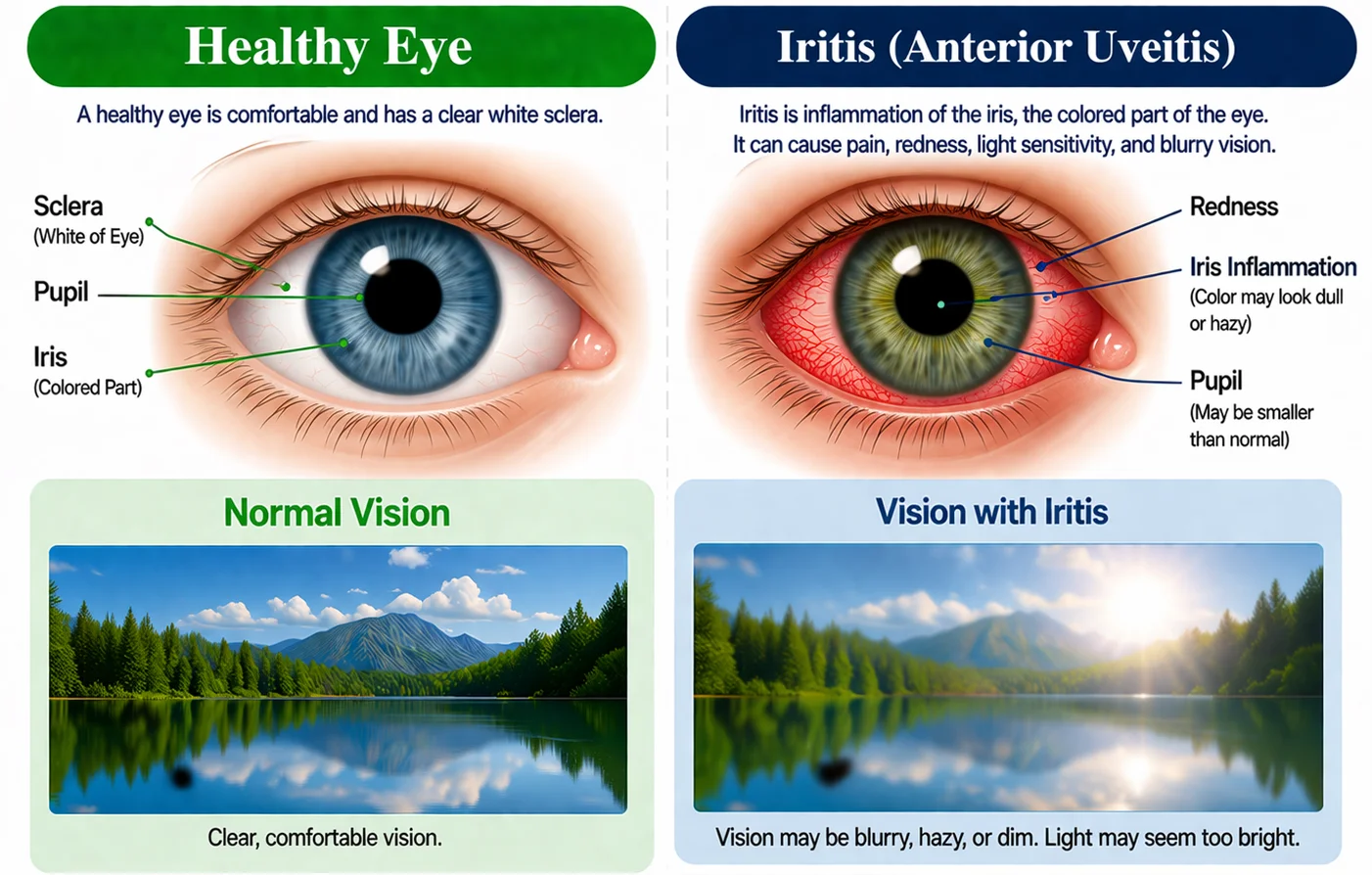
Iritis, also known as anterior uveitis, is an inflammation of the iris, the colored part of the eye. The iris sits at the front of the uvea, a highly vascular tissue inside the eye. Iritis is one of the more common forms of uveitis and is often seen in young to middle-aged adults. It usually develops quickly and may affect only one eye. Because inflammation inside the eye can become painful and may threaten vision if it is not treated promptly, early diagnosis is important.
Learn more about Iritis
Do I have Iritis ?
Iritis often comes on quickly, though in some patients symptoms can develop more gradually.
Symptoms of Iritis
Symptoms can include, but are not limited to:
Redness and irritation
The affected eye may look red and feel irritated very quickly after symptoms begin.
Eye pain and light sensitivity
Pain and sensitivity to light are two of the most common symptoms of iritis.
Blurred vision and floaters
Some people notice blurry vision or the appearance of floaters in the affected eye.
Treatment of Iritis
Treatment is aimed at reducing inflammation, easing pain, and addressing any underlying cause:
Dark glasses and dilating drops
Patients are often encouraged to wear dark glasses and use drops that dilate the pupil to help relieve pain and pressure.
Steroid eye drops or oral steroids
More serious cases may need steroid eye drops and sometimes oral steroids to help suppress inflammation.
Treating the underlying cause
If iritis is related to a condition such as herpes, AIDS, or syphilis, treating that condition can help improve the eye inflammation.

Whether you need a routine eye exam, upadet glasses or contacts, or help with an eye concert, our fiendly team is here to make the process easy.
- Personalized Care
- States-f-the-Art Equipment
- Experienced Optometrists
- Family-Friendly Environment

What causes Iritis?
The exact cause of iritis is not always known, but it has been associated with several triggers and medical conditions. Some cases happen after trauma to the eye. Others may be linked to infection, shingles or herpes zoster ophthalmicus, autoimmune disease, juvenile rheumatoid arthritis, or a reaction to medication. Because iritis can be connected to other health problems, identifying an underlying cause can be an important part of treatment.
Getting a Diagnosis of Iritis
Iritis is diagnosed after a physical examination of the eye. Your doctor will examine the eye carefully and may perform additional testing to confirm the diagnosis and make sure other eye problems are not also present.
Common tests used to diagnose iritis include:
Slit-Lamp Examination
A slit lamp allows your doctor to look closely at the front structures of the eye and evaluate the inflammation.
Visual Acuity Examination
This test measures how clearly you can see and helps show how much the inflammation is affecting vision.
Glaucoma Testing
Your doctor may test for glaucoma because eye pressure changes can sometimes be part of the picture in a painful red eye.
Pupil Light Response
When light is focused on the eyes, an eye with iritis may be painful because constriction of the pupil can worsen discomfort.
What to know about Iritis
Iritis can behave differently from one patient to the next, which is why early treatment and follow-up matter.
- Rapid onset is common, with symptoms often starting suddenly and unexpectedly;
- One-eye involvement is typical, although inflammation can still be serious even if only one eye is affected;
- Chronic or recurrent disease can develop in some patients, especially when iritis is linked to an underlying systemic condition that is not fully controlled.
Factors Increasing Risk of Iritis
While iritis can happen unexpectedly, some associated risk factors or triggers are seen more often than others.
Common associated risk factors can include:
- Trauma to the eye
- Infection
- Shingles or herpes zoster ophthalmicus
- Autoimmune disease
- Juvenile rheumatoid arthritis
- Reaction to medication
Questions about Iritis?
We’re here to help you take painful red-eye symptoms seriously and guide you toward prompt diagnosis and relief. Whether you are dealing with light sensitivity, blurred vision, eye pain, or recurring inflammation, our team is happy to help you take the next step toward protecting your sight.
Iritis, also called anterior uveitis, is an inflammation of the iris, the colored part of the eye. It is one of the more common forms of uveitis and often develops quickly.
Common symptoms include eye redness, irritation, eye pain, sensitivity to light, blurred vision, and sometimes floaters. Symptoms often start suddenly, though in some people they develop more slowly.
The exact cause is not always known, but iritis has been associated with trauma to the eye, infection, shingles, autoimmune disease, juvenile rheumatoid arthritis, and reactions to medication.
Treatment may include dark glasses, drops to dilate the pupil, steroid eye drops, and in more serious cases oral steroids. If iritis is caused by an underlying condition, treating that condition is also an important part of care.