Flashes & Floaters
Learn about flashes and floaters, including common causes, warning signs, diagnosis, and when urgent retinal treatment may be needed.
Overview
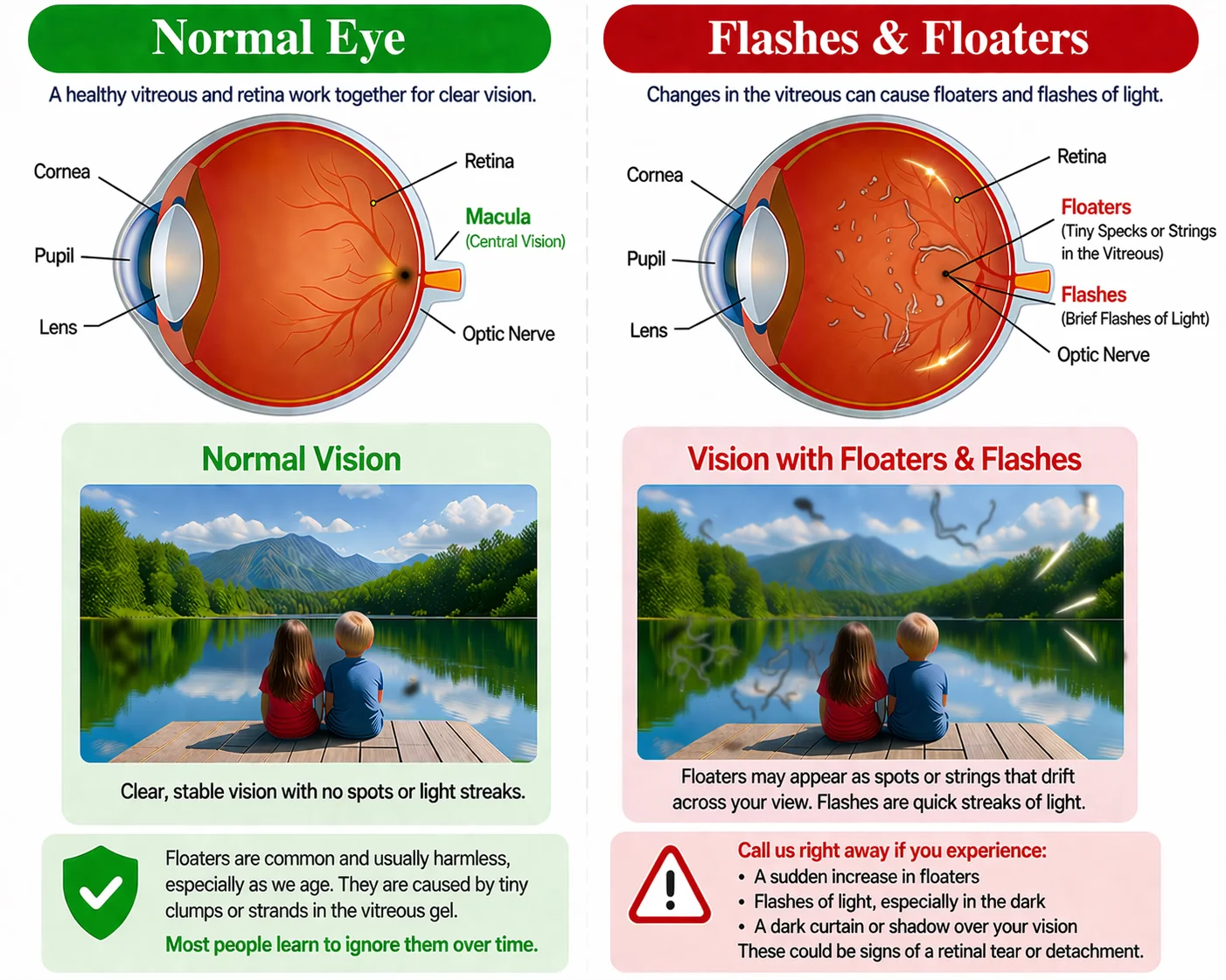
Flashes and floaters are very common visual symptoms that often happen as part of the natural aging process inside the eye. Over time, the vitreous, the gel that fills the inside of the eye, becomes thinner and more watery. As it changes, it can pull away from the retina in a process called posterior vitreous detachment, or PVD. When this happens, you may begin seeing flashes of light or floating spots, strands, or cobweb-like shapes moving across your vision. In many cases these symptoms are not dangerous, but because they can sometimes be associated with a retinal tear or retinal detachment, new or sudden symptoms should always be evaluated promptly.
Learn more about Flashes & Floaters
Do I have Flashes & Floaters ?
Flashes and floaters are often harmless, but sudden changes can sometimes be the first warning sign of a retinal tear or detachment.
Symptoms of Flashes & Floaters
Symptoms can include, but are not limited to:
Flashes of light
You may see brief flickers, lightning streaks, or flashes in your side vision, especially in dim lighting.
Floaters
You may notice specks, strands, webs, or shadowy shapes drifting across your field of vision.
Sudden vision change
A rapid increase in symptoms or a section of missing vision can be a warning sign that needs immediate attention.
Treatment of Flashes & Floaters
Treatment depends on whether the symptoms are uncomplicated or related to a retinal problem:
Monitoring
Most uncomplicated flashes and floaters do not require treatment beyond observation and follow-up eye exams.
Vitrectomy for severe interference
If floaters become severe enough to significantly interfere with vision, surgery may be considered to remove the vitreous gel.
Emergency retinal treatment
If a retinal tear or detachment is found, urgent treatment is needed to help prevent serious vision loss.

Whether you need a routine eye exam, upadet glasses or contacts, or help with an eye concert, our fiendly team is here to make the process easy.
- Personalized Care
- States-f-the-Art Equipment
- Experienced Optometrists
- Family-Friendly Environment

What causes Flashes & Floaters?
Flashes and floaters are most often caused by age-related changes in the vitreous gel inside the eye. As the vitreous becomes thinner and pulls away from the retina, collagen fibers and tissue debris can move into the visual field and cast shadows, creating floaters. Flashes happen when traction or pressure affects the retina. These symptoms are also seen more often in eyes that are nearsighted, injured, inflamed, or affected by conditions such as diabetes, retinitis, infections, migraines, cataract surgery, YAG laser treatment, head trauma, or eye injury.
Getting a Diagnosis of Flashes & Floaters
Flashes and floaters should be diagnosed with a thorough eye examination, especially when symptoms are new or unfamiliar. Because the symptoms can be similar whether the cause is harmless or serious, a dilated retinal exam is essential.
Common parts of the diagnostic process include:
Dilated Eye Examination
The pupils are widened so your doctor can examine the retina and look for retinal tears or signs of detachment.
Retinal Evaluation
Your doctor will examine the back of the eye carefully to determine whether the vitreous is pulling on the retina or whether complications have developed.
Follow-Up Monitoring
Even when the first exam shows uncomplicated PVD, follow-up may still be important because a small percentage of patients develop retinal tears within the following weeks.
When Flashes & Floaters are urgent
Most flashes and floaters are harmless, but certain situations need immediate attention because they may signal a retinal tear or detachment.
- New sudden symptoms should be checked promptly, especially if you have never experienced them before;
- A rapid increase in flashes or floaters may mean the retina is under more traction than expected;
- Missing vision in one area or momentary blindness in part of the field of vision is a warning sign that should be treated as urgent;
- Retinal tear or detachment symptoms require immediate medical evaluation to help protect vision.
Factors Increasing Risk of Flashes & Floaters
Flashes and floaters can happen to anyone, but they appear more often in certain eyes and situations.
Common associated risk factors include:
- Nearsightedness
- Previous cataract surgery or YAG laser treatment
- Diabetes
- Retinitis
- Eye infections
- Head trauma or eye injury
- Migraine-related vascular spasm
- Inflammation inside the eye
Questions about Flashes & Floaters?
We’re here to help you understand new flashes and floaters clearly and make sure more serious retinal problems are not being missed. Whether your symptoms are mild, sudden, or getting worse, our team is happy to help you take the next step toward protecting your vision.
Flashes and floaters are most commonly caused by age-related changes in the vitreous gel inside the eye. As the vitreous thins and pulls away from the retina, people may begin seeing floaters and flashes of light. They can also be associated with nearsightedness, inflammation, diabetes, injury, infections, and migraine-related vascular spasm.
Usually they are not dangerous, but they should still be evaluated by an ophthalmologist. In a small percentage of patients, new flashes and floaters are caused by a retinal tear, which can lead to retinal detachment and threaten vision.
You should seek immediate medical attention if you have a sudden onset of symptoms, a rapid increase in flashes or floaters, or momentary blindness or missing vision in one section of your field of vision.
Most flashes and floaters do not need treatment beyond regular monitoring. When symptoms cause major visual interference, a vitrectomy may be used to remove the vitreous gel. If a retinal tear or detachment is found, emergency retinal treatment is needed.