Retinal Vein Occlusion
Learn about retinal vein occlusion, including BRVO and CRVO symptoms, causes, diagnosis, and treatment options to help protect vision.
Overview
Retinal vein occlusion, often called RVO, happens when one of the veins that carries blood away from the retina becomes blocked. The retina is the thin layer of nerve tissue at the back of the eye that captures light and sends visual information to the brain. When a retinal vein is blocked, normal blood flow is disrupted and the retina may develop swelling, bleeding, or abnormal blood vessel growth. Depending on where the blockage occurs and how severe it is, RVO can cause mild blurred vision or more serious, lasting vision loss. Early diagnosis and careful follow-up are important to help protect as much vision as possible.
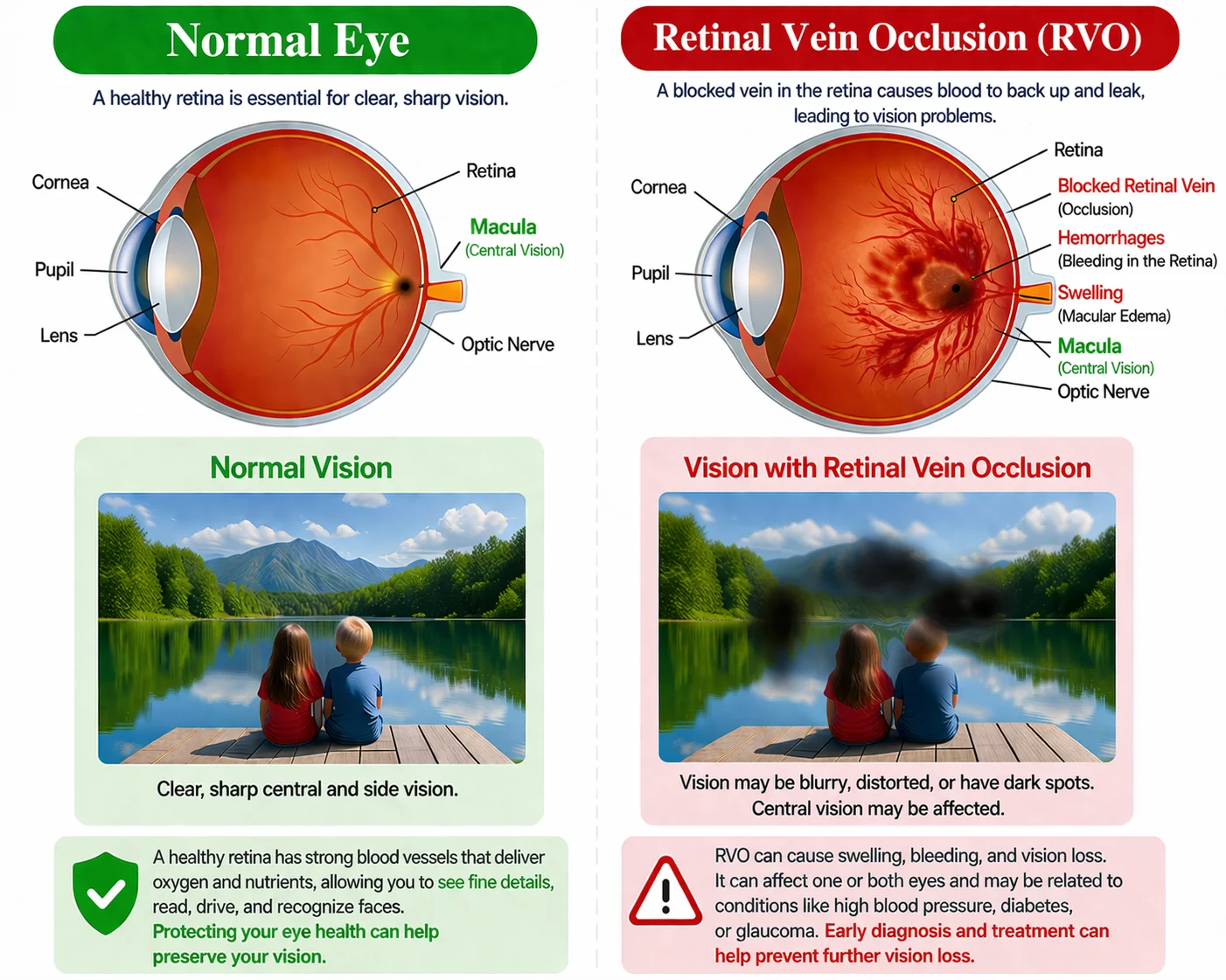
Learn more about Retinal Vein Occlusion
Do I have Retinal Vein Occlusion ?
A retinal vein occlusion often causes a sudden change in vision, even though the eye itself may not be painful.
Symptoms of Retinal Vein Occlusion
Symptoms can include, but are not limited to:
Sudden blurred vision
Vision may become blurry in all or part of one eye, sometimes quite suddenly.
Partial vision loss
Some people notice a missing area or more significant loss of sight depending on how much of the retina is affected.
Sudden change in one eye
Symptoms often involve one eye and may appear without warning.
Treatment of Retinal Vein Occlusion
Treatment focuses on limiting complications and protecting remaining vision:
Monitoring and medical risk control
Treatment often includes close retinal follow-up and addressing blood pressure, cholesterol, diabetes, smoking, and other vascular risks.
Laser treatment
Laser may be used for macular edema or to reduce the risk of abnormal blood vessels that can lead to glaucoma.
Anti-VEGF injections
Intraocular injections may help treat certain complications and preserve more vision.

Whether you need a routine eye exam, upadet glasses or contacts, or help with an eye concert, our fiendly team is here to make the process easy.
- Personalized Care
- States-f-the-Art Equipment
- Experienced Optometrists
- Family-Friendly Environment

What causes Retinal Vein Occlusion?
A retinal vein occlusion happens when the circulation leaving the retina becomes blocked. In many cases, a nearby retinal artery becomes hardened or swollen and presses on the vein beside it. That pressure can narrow the vein and make it difficult for blood to drain properly from the eye. Once circulation is blocked, the retina may swell, bleed, or begin growing abnormal blood vessels. Because RVO is closely linked to vascular health, it is often a sign that blood vessel risk factors need attention throughout the body as well as in the eye.
Getting a Diagnosis of Retinal Vein Occlusion
Retinal vein occlusion is diagnosed during a detailed retinal evaluation. After a thorough examination, your doctor may use additional testing to confirm the diagnosis and evaluate how much the retina has been affected.
Common tests used to diagnose retinal vein occlusion include:
Fluorescein Angiogram
This test uses a dye and retinal photographs to show circulation problems, leakage, or blocked blood flow in the retina.
Eye Pressure and Pupil Testing
Testing of intraocular pressure and pupil response may help identify related eye issues and complications.
Visual and Retinal Imaging Tests
Your doctor may also use slit-lamp examination, visual field testing, visual acuity testing, retinal photography, and in some cases blood tests to better understand the condition.
Different types of Retinal Vein Occlusion
Retinal vein occlusions are generally grouped by where the blockage occurs in the retinal circulation.
- Branch retinal vein occlusion (BRVO) happens when a smaller retinal vein becomes blocked where the veins branch into smaller segments inside the eye;
- Central retinal vein occlusion (CRVO) happens when the main retinal vein at the back of the eye becomes blocked;
- Severity and location matter because the amount of swelling, bleeding, and vision loss often depends on how much of the retinal circulation is involved.
Factors Increasing Risk of Retinal Vein Occlusion
Retinal vein occlusion is more common in older adults, especially when vascular or retinal risk factors are already present.
Common risk factors for retinal vein occlusion include:
- High blood pressure
- High cholesterol
- Diabetes
- Smoking
- Glaucoma
- Vitreous hemorrhage
- Macular edema
- Inflammatory conditions
Questions about Retinal Vein Occlusion?
We’re here to help you understand retinal vein occlusion clearly and guide you through the testing, monitoring, and treatment that best fit your condition. Whether you have had a sudden change in vision or have already been told you have BRVO or CRVO, our team is happy to help you take the next step toward protecting your sight.
Retinal vein occlusion is a blockage in one of the veins that carries blood away from the retina. When blood cannot drain properly, the retina may swell, bleed, or develop abnormal blood vessels that threaten vision.
Symptoms of retinal vein occlusion usually include a sudden loss of vision or blurring of vision in all or part of one eye. The severity depends on how much of the retina is affected.
BRVO means a smaller branch retinal vein is blocked, while CRVO means the main central retinal vein is blocked. CRVO often affects a larger portion of the retina because the blockage is more central.
There is no cure for retinal vein occlusion, so treatment focuses on preventing further vision loss and managing complications. Depending on the case, treatment may include laser for macular edema, anti-VEGF injections, and management of blood pressure, cholesterol, diabetes, smoking, and other vascular risks.