Cataracts
Learn about cataracts, common symptoms, causes, diagnosis, and treatment options, including when cataract surgery may help restore clearer vision.
Overview
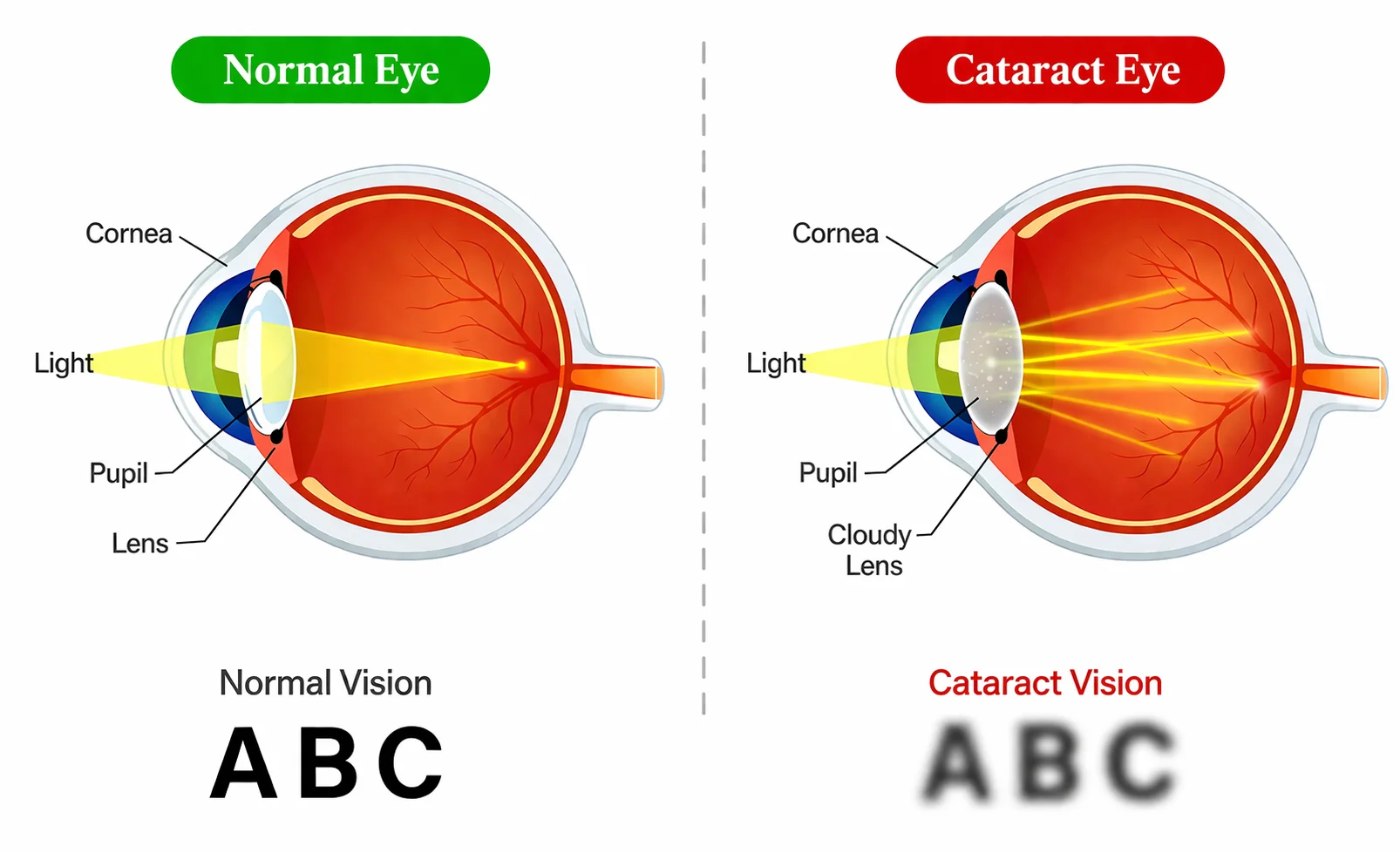
A cataract is a clouding of the eye’s natural lens. As the lens becomes less clear, vision may begin to look hazy, dim, or yellowed, and everyday tasks like reading, seeing fine detail, or driving at night can become more difficult. Cataracts are very common as we age and usually develop gradually, so changes in vision can be easy to miss at first. When a cataract starts interfering with your daily life, modern cataract surgery can remove the cloudy lens and replace it with a clear artificial lens to help restore sharper vision.
Learn more about Cataracts
Do I have Cataracts ?
Cataracts usually develop gradually and can make vision seem cloudy, dim, or less crisp, especially in bright light or while driving at night.
Symptoms of Cataracts
Symptoms can include, but are not limited to:
Blurred or cloudy vision
Vision may look hazy, foggy, or less sharp than it used to.
Glare and halos
Headlights, sunlight, and lamps may seem harsh, with halos or starbursts around lights.
Faded colors and trouble reading
Colors may seem dull or yellowed, and you may need more light for reading or close work.
Treatment of Cataracts
Treatment options depend on how much the cataract is affecting your daily life:
Updated glasses and brighter lighting
In the early stages, a new prescription, magnification, and stronger lighting may help temporarily.
Monitoring with routine exams
Regular eye exams help track cataract progression and determine when treatment is needed.
Cataract surgery
Surgery removes the cloudy lens and replaces it with a clear intraocular lens to improve vision.

Whether you need a routine eye exam, upadet glasses or contacts, or help with an eye concert, our fiendly team is here to make the process easy.
- Personalized Care
- States-f-the-Art Equipment
- Experienced Optometrists
- Family-Friendly Environment

What causes Cataracts?
Cataracts most often develop as part of the natural aging process. Over time, proteins inside the eye’s natural lens begin to break down and clump together, making the lens less clear. Instead of light passing cleanly through the eye, the cloudy lens scatters and blocks light, which can make vision seem blurry, dim, or washed out. Aging is the most common cause, but cataracts may also be associated with diabetes, long-term steroid use, eye injury, previous eye surgery, radiation exposure, or, in rare cases, can be present at birth.
Getting a Diagnosis of Cataracts
Cataracts are typically diagnosed during a comprehensive eye exam. During your visit, your eye doctor will evaluate how clearly you see, examine the lens inside the eye, and look for other conditions that may also be affecting your vision. If surgery is being considered, additional measurements may be taken to help choose the right lens implant.
Common tests used to diagnose cataracts include:
Visual Acuity Test
A visual acuity test measures how clearly you can see letters and details at a distance. This helps your doctor understand how much your vision has been affected.
Slit Lamp Examination
A slit lamp allows your eye doctor to closely examine the structures at the front of the eye, including the natural lens, to look for clouding and assess the severity of a cataract.
Dilated Eye Exam
During a dilated eye exam, special drops widen the pupil so your doctor can get a clearer view of the lens, retina, and overall eye health before recommending treatment.
Different types of Cataracts
Age-related cataracts are the most common, but they are not the only type. Cataracts can also develop because of certain medical conditions, medications, injury, or very early in life. Understanding the type of cataract you have helps your eye doctor recommend the most appropriate treatment and timing for surgery.
- Age-related cataracts are the most common and usually develop gradually over time as the natural lens becomes less clear;
- Secondary cataracts may develop in association with conditions such as diabetes, from long-term steroid use, or after another eye procedure;
- Traumatic cataracts can form after an injury to the eye;
- Congenital cataracts are present at birth or develop during childhood;
- Radiation cataracts can develop after exposure to certain types of radiation.
Factors Increasing Risk of Cataracts
Cataracts are common, especially with age, but some people are more likely to develop them sooner or experience faster progression than others. Your eye doctor will consider your overall health, eye history, and any medications you take when evaluating your risk.
Common risk factors for cataracts include:
- Increasing age
- Diabetes
- Smoking
- Long-term steroid use
- Excessive UV light exposure
- Previous eye injury or eye surgery
- Family history of cataracts
Questions about Cataracts?
We’re here to make your visit feel clear, comfortable, and low-stress. If your vision seems cloudy, nighttime driving has become harder, or you’re wondering whether it may be time to talk about cataract surgery, our team is happy to help. Reach out today to schedule an evaluation and learn about your options for clearer vision.
A cataract is a clouding of the eye’s natural lens. As the lens becomes less transparent, light cannot pass through as clearly, which can make vision seem blurry, dim, hazy, or less colorful.
Common cataract symptoms include cloudy or blurry vision, glare from bright lights, halos around headlights, faded or yellowed colors, trouble reading, and difficulty driving at night. Cataracts usually develop gradually, so changes may be subtle at first.
Cataract surgery is typically recommended when the cataract begins interfering with your daily life. If reading, driving, work, hobbies, or overall quality of vision are being affected, your eye doctor may recommend surgery to remove the cloudy lens and replace it with an artificial intraocular lens.
In the early stages, stronger glasses, brighter lighting, and routine monitoring may help you function more comfortably. However, surgery is the only way to remove a cataract. During a cataract evaluation, your eye doctor can help you decide when it makes sense to move from temporary measures to surgical treatment.