
Glaucoma & Cataract Management
Glaucoma and cataract management helps monitor changes in your eye health, protect vision, and guide treatment when needed. Learn what to expect, common symptoms, and when ongoing care may be important.
Learn about Glaucoma & Cataract Management
What happens during Glaucoma & Cataract Management?
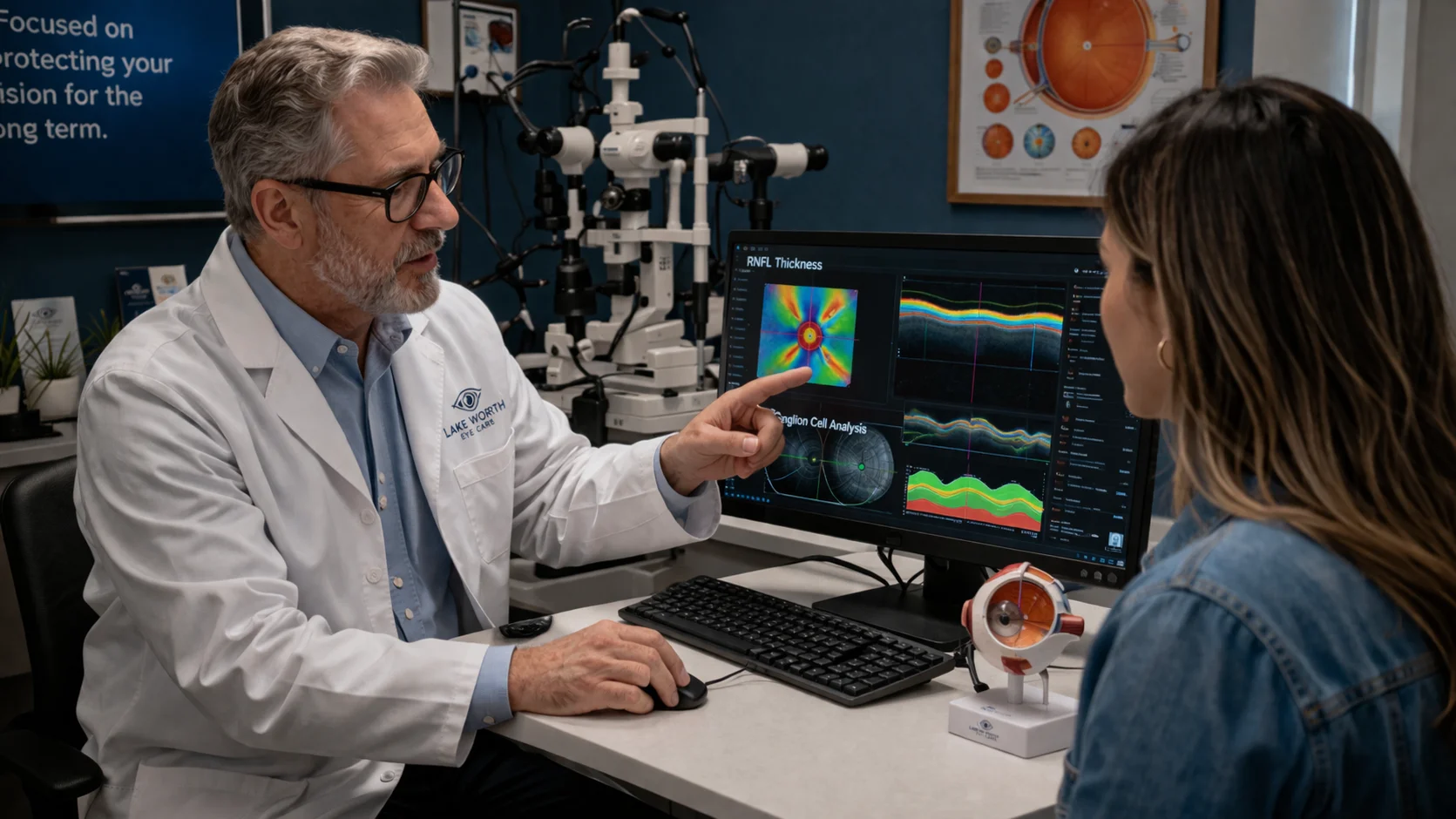
These visits are designed to help your doctor track changes in your eye health and determine how glaucoma or cataracts may be affecting your vision. Depending on your needs, your appointment may include vision testing, eye pressure measurements, evaluation of the optic nerve, and a close look at the lens and other structures inside the eye.
The exact testing can vary from patient to patient, but the overall goal stays the same: to identify changes early, monitor progression carefully, and make sure your care plan is appropriate for your eyes and lifestyle. If treatment, referral, or follow-up is needed, we will walk you through the next steps clearly and carefully.
Do I need Glaucoma & Cataract Management?
You may benefit from glaucoma and cataract management if you have been diagnosed with one of these conditions, have risk factors that require closer monitoring, or have started noticing changes in your vision. Many of these changes can happen gradually, which is why ongoing follow-up is so important.
This type of care can be especially helpful if you are experiencing blurred vision, increasing glare, trouble with night driving, reduced contrast, gradual loss of side vision, or if another provider has told you that your eye pressure, optic nerve, or lens changes should be monitored more closely. Regular visits help make sure subtle changes do not go unnoticed.

Whether you need a routine eye exam, upadet glasses or contacts, or help with an eye concert, our fiendly team is here to make the process easy.
- Personalized Care
- States-f-the-Art Equipment
- Experienced Optometrists
- Family-Friendly Environment
How can Glaucoma & Cataract Management help?
Glaucoma and cataract management can help protect your vision by keeping a close watch on changes that may affect eye health over time. Regular monitoring allows your provider to evaluate progression, adjust treatment recommendations when needed, and help you understand when additional care or surgical referral may be appropriate.
Signs it may be time to schedule
You should consider scheduling glaucoma and cataract monitoring if you have been told you have elevated eye pressure, optic nerve changes, early cataracts, or a family history of glaucoma. It is also a good idea to schedule if you notice increasing glare, cloudy vision, difficulty driving at night, reduced side vision, or gradual changes in how clearly you see.
Do I need ongoing Glaucoma & Cataract Management?
In many cases, yes. Glaucoma and cataracts can change gradually, and regular follow-up gives your doctor the opportunity to compare results over time and look for subtle differences that may affect your care. Ongoing monitoring is often one of the most important parts of protecting long-term vision.
Glaucoma & Cataract Management for ongoing monitoring
Glaucoma and cataract management is especially important for patients who need long-term monitoring of vision and eye health. Regular visits can help track progression, guide treatment decisions, and support timely action if your condition changes.
- Family history of glaucoma
- Elevated eye pressure or optic nerve changes
- Early or progressing cataracts
- Increasing glare or halos around lights
- Difficulty with night driving or low-contrast vision
- Gradual changes in side vision or overall clarity
- Need for routine follow-up after diagnosis or referral
Questions about Glaucoma & Cataract Management?
We’re here to help you feel informed, supported, and confident in your care. Whether you have questions about glaucoma, cataracts, follow-up testing, or changes in your vision, our team is happy to help. Reach out today and let us help you take the next step in protecting your sight.
Glaucoma and cataract management may include vision testing, eye pressure checks, evaluation of the optic nerve and lens, and regular follow-up visits to monitor changes over time. The specific plan depends on your diagnosis, symptoms, and risk factors.
Yes. Both glaucoma and cataracts can change gradually, which is why regular monitoring is so important. Follow-up care helps detect changes that may not be obvious right away.
You should schedule an evaluation if you have been diagnosed with glaucoma or cataracts, have a family history of glaucoma, have been told your eye pressure is elevated, or notice symptoms such as glare, cloudy vision, or trouble seeing at night.
In many cases, yes. Regular monitoring helps your doctor compare findings over time, watch for progression, and decide when treatment changes or additional care may be needed.