Dry Eyes
Learn about dry eye symptoms, causes, diagnosis, and treatment options, including artificial tears, prescription drops, LipiFlow, IPL, and more.
Overview
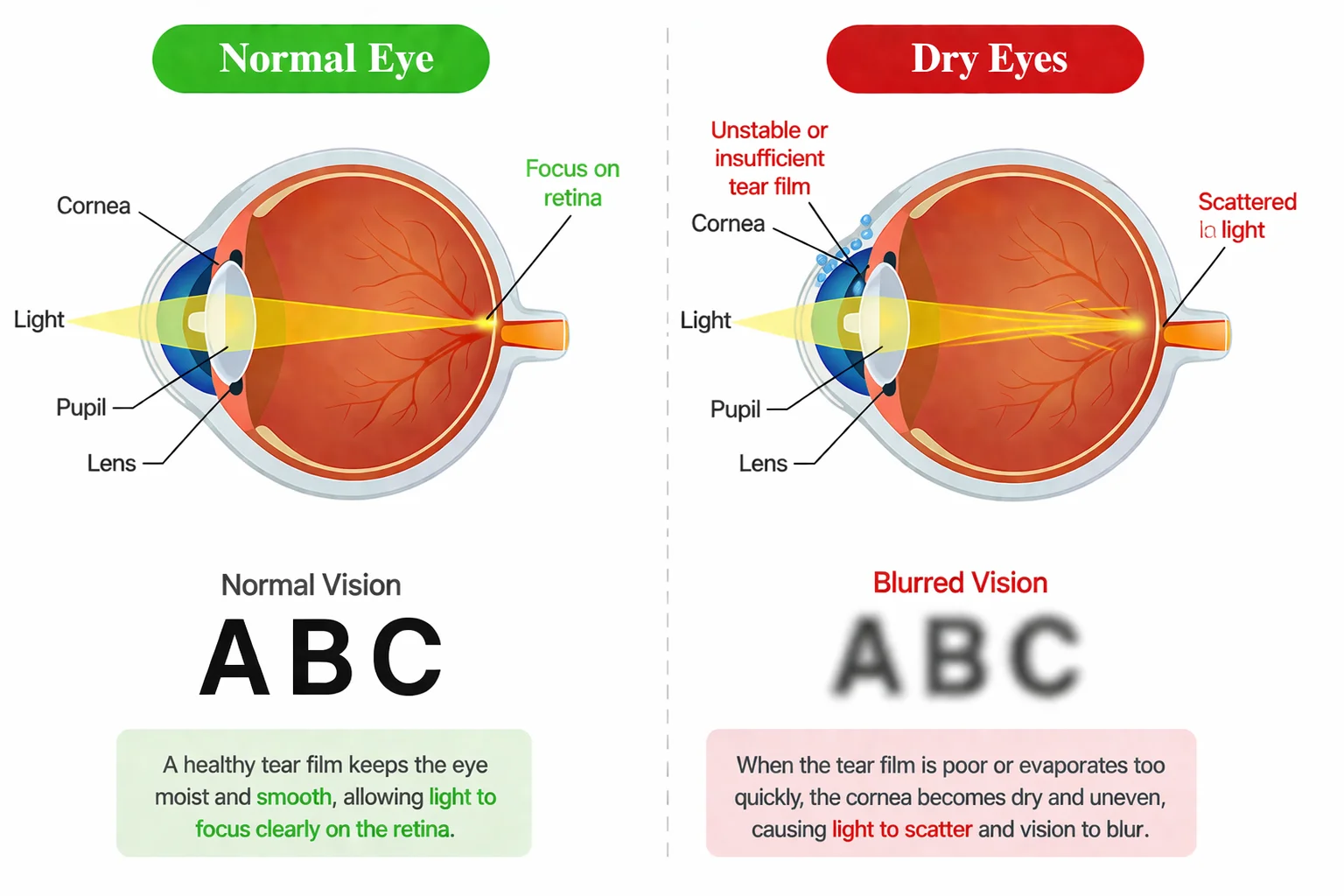
Dry eye is a very common condition that happens when your eyes do not make enough tears, do not make the right quality tears, or the tear film evaporates too quickly. The tear film is important because it keeps the front of the eye smooth, comfortable, and properly lubricated for clear vision. When that system is disrupted, your eyes may feel irritated, tired, gritty, watery, or blurry. Dry eye can begin as an occasional problem, but for many people it becomes chronic and may affect both comfort and the quality of everyday vision if it is not treated properly.
Learn more about Dry Eyes
Do I have Dry Eyes ?
Dry eye can range from occasional irritation to a chronic problem that affects how your eyes feel and how clearly you see.
Symptoms of Dry Eyes
Symptoms can include, but are not limited to:
Burning, stinging, or scratchiness
Your eyes may feel irritated, dry, gritty, or like something is stuck in them.
Redness and watery eyes
Dry eye can cause redness and even excessive tearing as the eyes react to irritation.
Blurred vision or contact lens discomfort
Vision may fluctuate or blur, and contact lenses may become harder to wear comfortably.
Treatment of Dry Eyes
Treatment depends on the type and cause of dry eye:
Artificial tears and home care
Lubricating drops, warm compresses, eyelid hygiene, and lifestyle changes may help mild symptoms.
Prescription or in-office treatment
Prescription drops, punctal plugs, LipiFlow, or IPL may be recommended for more persistent dry eye.
Specialty lenses or advanced treatment
Some patients benefit from scleral lenses or other advanced options when symptoms are more severe.

Whether you need a routine eye exam, upadet glasses or contacts, or help with an eye concert, our fiendly team is here to make the process easy.
- Personalized Care
- States-f-the-Art Equipment
- Experienced Optometrists
- Family-Friendly Environment

What causes Dry Eyes?
Dry eye can happen for more than one reason. In some people, the eyes are not making enough tears. In others, the tear film is poor quality and evaporates too quickly. Common causes and contributing factors include aging, hormonal changes, medications, autoimmune disease, screen use with reduced blinking, dry or windy environments, meibomian gland dysfunction, blepharitis, rosacea, and in some cases prior eye surgery such as LASIK. Because the causes vary, the best treatment usually starts with figuring out which part of the tear film system is not working well.
Getting a Diagnosis of Dry Eyes
Dry eye is diagnosed during a thorough eye exam. Your doctor will look at your eyelids and tear film, review possible triggers in your environment or health history, and test how well your tears are being made and how long they remain stable on the eye.
Common tests used to diagnose dry eye include:
Schirmer Test
This test measures tear production to see whether your eyes are making enough tears.
Tear Break-Up Testing
Special dye drops can help your doctor see how quickly the tear film dries or breaks apart on the eye.
Meibomian Gland Evaluation
Your doctor may examine or gently press the eyelid glands to see whether the oily layer of the tear film is being produced normally.
Different types of Dry Eyes
Dry eye is not always the same from one patient to another. Understanding the type of dry eye helps guide the most effective treatment plan.
- Aqueous-deficient dry eye happens when the eyes do not make enough of the watery part of the tear film;
- Evaporative dry eye happens when tears evaporate too quickly, often because the oily layer is not functioning well;
- Mixed dry eye includes features of both low tear production and unstable tear evaporation.
Factors Increasing Risk of Dry Eyes
Dry eye can affect anyone, but some people are more likely to develop it than others.
Common risk factors for dry eye include:
- Increasing age
- Post-menopausal hormonal changes
- Autoimmune conditions such as Sjogren’s syndrome or rheumatoid arthritis
- Certain medications, including antihistamines, decongestants, antidepressants, and beta-blockers
- Meibomian gland dysfunction or blepharitis
- Rosacea
- Screen time with reduced blinking
- Wind, smoke, or dry indoor air
Questions about Dry Eyes?
We’re here to help you get relief from dry, irritated, watery, or blurry eyes. Whether your symptoms are occasional or chronic, our team can help identify the cause and guide you toward treatment options that make your eyes feel more comfortable and your vision more stable.
Dry eye is a condition in which your eyes do not make enough tears, do not make good-quality tears, or the tear film evaporates too quickly. This can affect both comfort and the quality of your vision.
Even though it sounds backward, dry eyes can water excessively. Irritation on the surface of the eye can trigger reflex tearing, but those tears often do not solve the underlying lubrication problem for very long.
Treatment depends on the cause and severity. Options may include artificial tears, warm compresses, eyelid hygiene, prescription eye drops, punctal plugs, LipiFlow, IPL, or specialty contact lenses in more advanced cases.
Yes. Dry eye may begin as an occasional problem, but it can become chronic. If it is not managed properly, it can lead to ongoing discomfort, inflammation, and problems with visual quality over time.