Amblyopia
Learn about amblyopia, including symptoms, causes, diagnosis, and treatment options such as glasses, patching, atropine drops, and surgery.
Overview
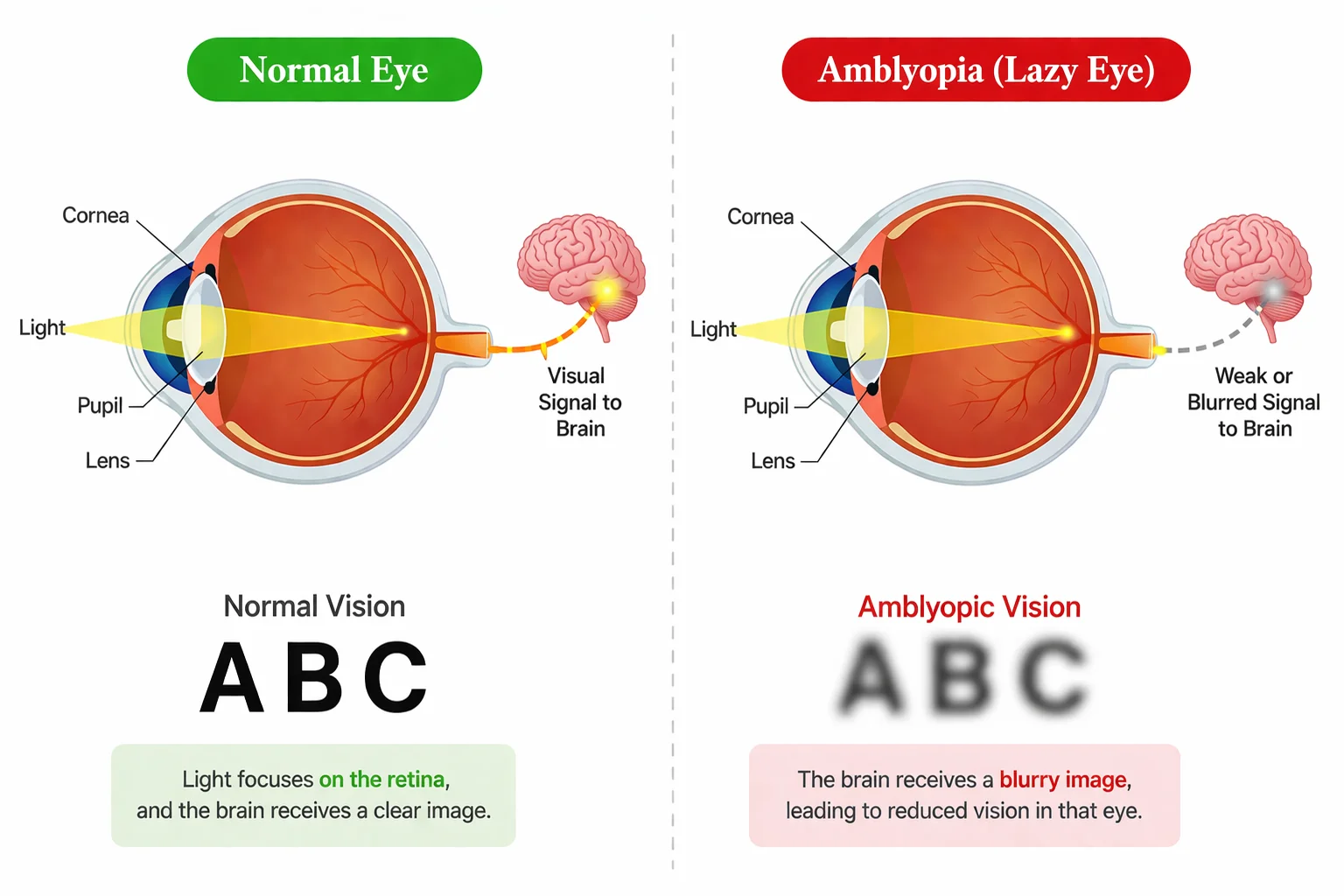
Amblyopia, often called lazy eye, is a vision development problem that usually begins in childhood. It happens when one eye does not develop normal vision because the brain starts relying more on the stronger eye and paying less attention to the weaker one. If it is not treated early enough, the weaker eye may never develop its best possible vision. Amblyopia can happen because of eye misalignment, a large difference in prescription between the eyes, or a structural problem that blocks clear vision. Early diagnosis and treatment are very important because the earlier amblyopia is treated, the better the chance of improving vision.
Learn more about Amblyopia
Do I have Amblyopia ?
Amblyopia often begins in childhood, and parents may notice signs before a child realizes anything is wrong.
Symptoms of Amblyopia
Symptoms and signs can include, but are not limited to:
Eye misalignment
One eye may drift inward, outward, up, or down instead of working together with the other eye.
Poor depth perception
Children may have trouble judging distance or using both eyes together effectively.
Squinting, head tilt, or unusual eye movements
Some children repeatedly close one eye, tilt their head, or show eyes that do not track together normally.
Treatment of Amblyopia
Treatments can include, but are not limited to:
Eyeglasses or contact lenses
When amblyopia is related to a refractive difference between the eyes, correcting that prescription can help improve visual input.
Patching or atropine drops
These treatments make the stronger eye do less work so the weaker eye has to develop more actively.
Surgery when needed
If poor alignment or another structural issue is contributing to the problem, surgery may be part of treatment.

Whether you need a routine eye exam, upadet glasses or contacts, or help with an eye concert, our fiendly team is here to make the process easy.
- Personalized Care
- States-f-the-Art Equipment
- Experienced Optometrists
- Family-Friendly Environment

What causes Amblyopia?
Amblyopia happens when one eye is not able to provide the brain with a clear, equally useful image during childhood development. Over time, the brain begins to rely more on the stronger eye and suppress input from the weaker one. Common causes include strabismus, a large difference in prescription between the two eyes, and structural problems that block or blur vision, such as a cataract, droopy eyelid, or corneal scar. Because vision development is time-sensitive in childhood, treatment should begin as early as possible when amblyopia is found.
Getting a Diagnosis of Amblyopia
Amblyopia is diagnosed during a thorough eye exam. Early screening is especially important in infants and children because treatment is often most effective while the visual system is still developing.
Common tests used to diagnose amblyopia include:
Vision Testing
Your eye doctor checks how well each eye sees on its own and whether one eye is significantly weaker than the other.
Refraction Testing
This measures the prescription in each eye to see whether a large refractive difference may be contributing to the problem.
Eye Alignment and Structural Exam
Your doctor evaluates how the eyes move together and looks for issues such as strabismus, cataract, droopy eyelid, or other structural causes that may interfere with normal vision development.
Different types of Amblyopia
Amblyopia can develop for different reasons, and understanding the cause helps guide the best treatment plan.
- Strabismic amblyopia develops when the eyes are misaligned and the brain begins to ignore input from one eye;
- Refractive amblyopia happens when one eye has a much stronger prescription than the other and the brain favors the clearer eye;
- Deprivation amblyopia occurs when something physically blocks or blurs vision in one eye, such as a cataract, droopy eyelid, or corneal scar.
Factors Increasing Risk of Amblyopia
Some children are at higher risk for amblyopia than others, which is why regular pediatric eye screening matters.
Common risk factors for amblyopia include:
- Premature birth
- Being smaller than average at birth
- Family history of amblyopia
- Developmental disabilities
- Strabismus or a noticeable eye turn
- A large prescription difference between the two eyes
Questions about Amblyopia?
We’re here to help you catch vision problems early and protect healthy visual development. Whether you have questions about a child’s eye turn, patching, glasses, or what to expect during an evaluation, our team is happy to help. Reach out today to schedule an eye exam.
Amblyopia, or lazy eye, is a childhood vision development problem in which one eye does not develop normal vision. The brain begins relying more on the stronger eye and suppressing the weaker one.
Signs of amblyopia can include an eye turn, poor depth perception, repeated squinting or eye closure, head tilt, and eyes that do not move together normally. Some children may not complain because the stronger eye is doing most of the work.
Treatment depends on the cause but may include glasses, contact lenses, patching the stronger eye, atropine drops, or surgery for alignment or structural problems. Early treatment is important because vision development is most responsive in childhood.
You usually cannot prevent the underlying causes completely, but regular pediatric eye exams can catch amblyopia early and help prevent permanent vision loss from delayed treatment.