
Pediatric Eye Exams
Learn what happens during pediatric eye exams, when children should be seen, and how regular visits can support healthy vision and eye development.
Learn about Pediatric Eye Exams
What happens during Pediatric Eye Exams?
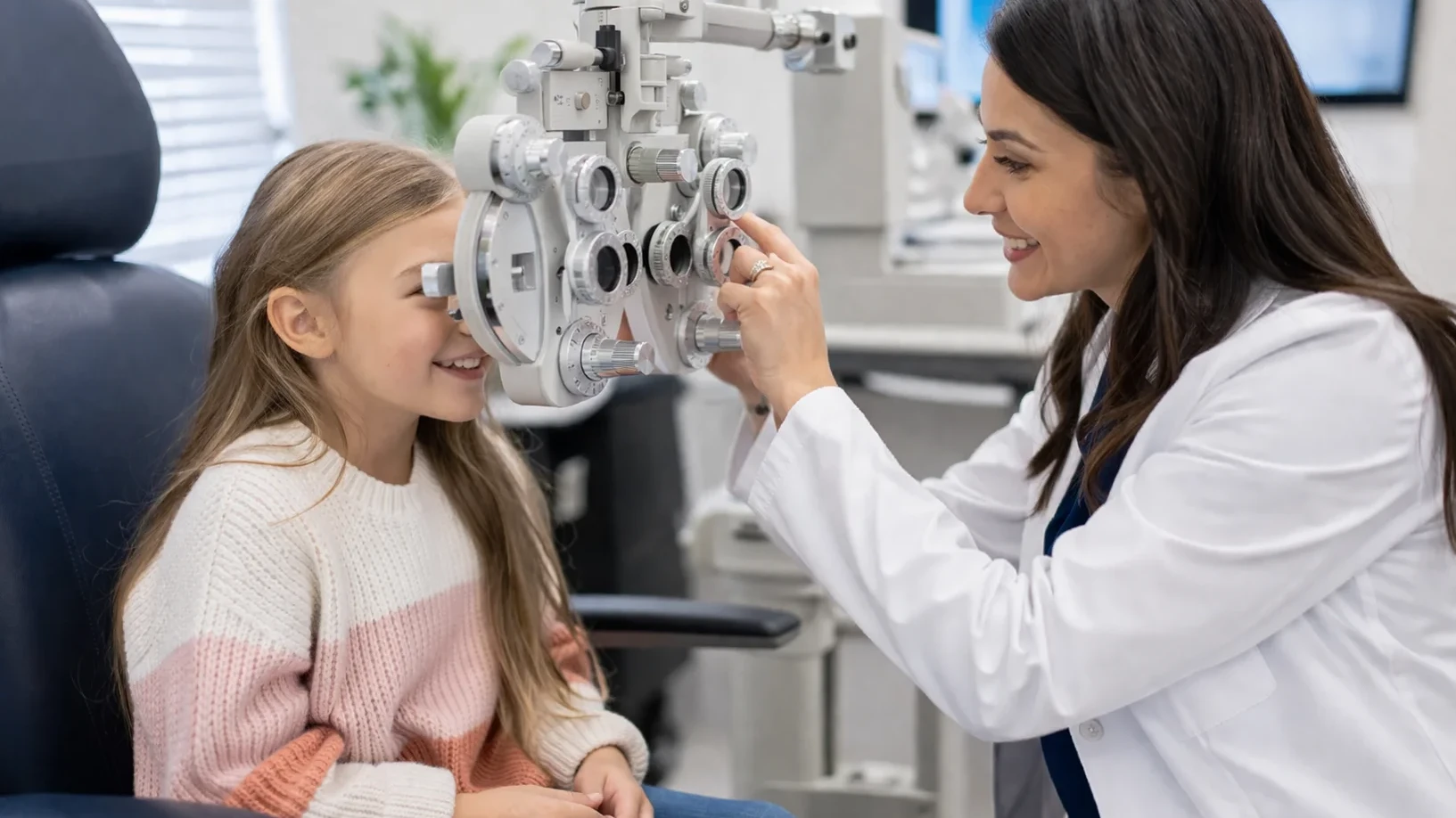
Pediatric eye exams are tailored to your child’s age, comfort level, and stage of development. We may check how clearly your child sees, how well the eyes move and focus, whether the eyes work together properly, and whether there are any early signs of vision problems that could affect learning or daily activities.
These exams are not meant to feel overwhelming. We guide children through the visit step by step and keep the process as relaxed and encouraging as possible. In many cases, early testing can help identify problems before your child is even able to explain that something feels off.
Should my child have Pediatric Eye Exams?
Yes, routine pediatric eye exams are an important part of protecting your child’s vision as they grow. Even when a child does not complain about blurry vision, some problems can still be present and may affect reading, attention, eye coordination, and overall visual development.
Your child may especially benefit from an exam if they squint, sit very close to screens, rub their eyes often, complain of headaches, lose their place while reading, avoid near work, or seem to have trouble focusing in school. Regular exams can provide clarity, reassurance, and a plan if treatment or follow-up is needed.

Whether you need a routine eye exam, upadet glasses or contacts, or help with an eye concert, our fiendly team is here to make the process easy.
- Personalized Care
- States-f-the-Art Equipment
- Experienced Optometrists
- Family-Friendly Environment
How can Pediatric Eye Exams help?
Pediatric eye exams can help detect vision concerns that may affect your child’s comfort, confidence, and development. In addition to checking prescription needs, your provider may evaluate eye alignment, tracking, focusing ability, and signs of amblyopia or other common childhood vision issues.
Signs it may be time to schedule
You should consider scheduling a pediatric eye exam if your child squints, covers one eye, sits unusually close to books or screens, struggles with reading, complains of headaches, has frequent eye rubbing, or if one eye seems to drift or turn. These symptoms can have different causes, and an exam can help determine what support your child may need.
Does my child need regular Pediatric Eye Exams?
Yes. Children’s eyes can change as they grow, and some vision problems are easy to miss without a full exam. Regular pediatric eye exams allow your doctor to monitor visual development, check for subtle changes, and make sure your child’s eyes are supporting learning and everyday activities as well as they should.
Pediatric Eye Exams for health monitoring
I am text block. Click edit button to change this text. Lorem ipsum dolor sit amet, consectetur adipiscing elit. Ut elit tellus, luctus nec ullamcorper mattis, pulvinar dapibus leo.
I am text block. Click edit button to change this text. Lorem ipsum dolor sit amet, consectetur adipiscing elit. Ut elit tellus, luctus nec ullamcorper mattis, pulvinar dapibus leo.
- Family history of eye problems or strong prescription changes
- One eye turning in or out
- Previous failed vision screening at school or the pediatrician’s office
- Frequent squinting, blinking, or eye rubbing
- Trouble reading, focusing, or maintaining attention on near work
- Complaints of headaches or tired eyes
- Previous eye injury or a history of lazy eye
Questions about Pediatric Eye Exams?
We’re here to make your child’s visit feel comfortable, welcoming, and stress-free. Whether you have questions about symptoms, school vision concerns, or when to schedule, our team is happy to help. Reach out today and let us help you take the next step toward clear, healthy vision for your child.
Most pediatric eye exams take about an hour, although timing can vary depending on your child’s age, comfort level, and the testing needed during the visit.
Pediatric eye exams can help detect common childhood vision concerns such as nearsightedness, farsightedness, lazy eye, eye alignment problems, and tracking or focusing issues that may affect school and daily activities.
Yes. School screenings can be helpful, but they are not the same as a full pediatric eye exam. A comprehensive exam gives your child’s doctor a more complete look at visual development and eye health.
The right timing can vary from child to child, especially if there are symptoms, school concerns, or a family history of vision problems. If you are unsure, our team can help you determine when to schedule your child’s visit.