Presbyopia
Learn about presbyopia, including common symptoms, causes, diagnosis, and treatment options such as reading glasses, contacts, and vision correction procedures.
Overview
Presbyopia is an age-related vision change that makes reading and other close-up tasks more difficult. It happens as the natural lens inside the eye gradually becomes more rigid and less flexible over time, making it harder to focus on nearby objects. Many people first notice presbyopia after age 40, especially when they begin holding their phone, books, or menus farther away to see clearly. Presbyopia is extremely common and can often be managed with reading glasses, contact lenses, or, for some patients, vision correction procedures recommended by an eye doctor.
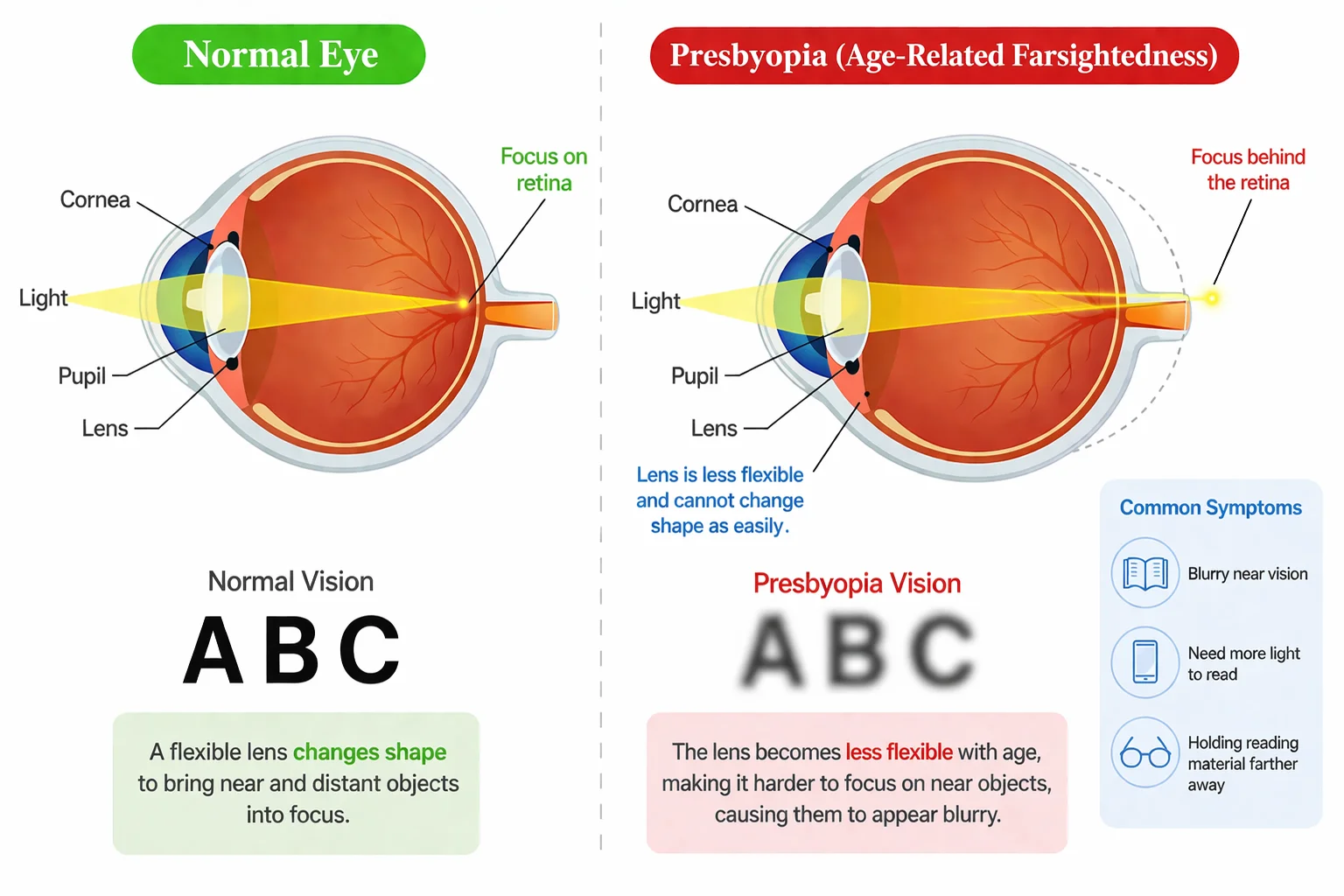
Learn more about Presbyopia
Do I have Presbyopia ?
Presbyopia is a very common age-related condition that makes it harder to focus on reading and other close-up tasks.
Symptoms of Presbyopia
Symptoms can include, but are not limited to:
Difficulty reading up close
Books, menus, phones, and other near tasks may become harder to see clearly.
Eye strain and fatigue
Your eyes may feel tired or strained after reading, screen time, or other close work.
Headaches and needing more light
You may need brighter lighting or hold objects farther away to focus comfortably.
Treatment of Presbyopia
Treatments can include, but are not limited to:
Reading glasses or progressives
Many patients do well with prescription reading glasses, bifocals, or progressive lenses.
Contact lenses
Multifocal or monovision contact lenses may help some patients see more comfortably at multiple distances.
LASIK, PRK, or lens implants
Some patients may be candidates for procedures that reduce dependence on reading glasses.

Whether you need a routine eye exam, upadet glasses or contacts, or help with an eye concert, our fiendly team is here to make the process easy.
- Personalized Care
- States-f-the-Art Equipment
- Experienced Optometrists
- Family-Friendly Environment

What causes Presbyopia?
Presbyopia is caused by normal age-related changes inside the eye. Over time, the natural lens becomes thicker, more rigid, and less flexible, making it harder to change focus from far away to up close. As this focusing ability decreases, near vision tasks like reading, texting, or sewing become more difficult and may require more effort, brighter light, or corrective lenses. Presbyopia is a normal part of aging and eventually affects nearly everyone.
Getting a Diagnosis of Presbyopia
Presbyopia is typically diagnosed during a comprehensive eye exam. During your visit, your eye doctor will evaluate how well you can focus at near distances, check for other refractive errors, and determine which correction options may best fit your lifestyle and visual goals.
Common tests used to diagnose presbyopia include:
Near Vision Testing
Your doctor may ask you to read letters or words at different distances to see how much your near focus has changed.
Refraction Test
A refraction test helps determine whether reading glasses, bifocals, progressives, or another form of correction will provide the clearest and most comfortable vision.
Comprehensive Eye Exam
A full eye exam helps rule out other causes of blurred vision and allows your doctor to look for signs of nearsightedness, farsightedness, astigmatism, or other age-related eye changes.
Different types of Presbyopia
Presbyopia is usually described by how it is being managed rather than by classic subtypes. Some patients only need simple near correction, while others need help at multiple distances or may be candidates for surgical options.
- Early presbyopia may cause only mild reading difficulty or occasional eye strain with close work;
- Progressive presbyopia becomes more noticeable over time as the lens continues to lose flexibility with age;
- Premature presbyopia can appear earlier in some patients, sometimes alongside farsightedness or certain medical or medication-related factors;
- Surgically managed presbyopia may be addressed in selected patients with procedures such as monovision LASIK, PRK, or lens implants.
Factors Increasing Risk of Presbyopia
Presbyopia is most strongly associated with age, but some people notice symptoms earlier than others. Certain prescriptions, health conditions, and medications may increase the chance of earlier or more noticeable near focusing problems.
Common risk factors for presbyopia include:
- Age over 40
- Farsightedness
- Diabetes
- Cardiovascular disease
- Multiple sclerosis
- Certain medications, including some antihistamines or antidepressants
Questions about Presbyopia?
We’re here to make your visit feel simple, comfortable, and stress-free. Whether you have questions about reading changes, treatment options, or what to expect during your appointment, our team is happy to help. Reach out today and let us help you take the next step toward clearer, more comfortable vision.
Presbyopia is an age-related vision condition that makes it harder to focus on close-up tasks like reading, texting, or threading a needle. It happens because the natural lens inside the eye becomes less flexible over time.
Common presbyopia symptoms include trouble reading up close, eye strain, headaches, fatigue, needing more light to read, and holding objects farther away to see them clearly. Many people first notice these changes after age 40.
Not exactly. Presbyopia is an age-related loss of near focusing ability, while farsightedness is a refractive error related to the shape of the eye. A person can have one or both at the same time.
Presbyopia is often treated with reading glasses, bifocals, progressive lenses, or certain contact lens options. Some patients may also be candidates for procedures such as monovision LASIK, PRK, or lens implants, depending on their eyes and visual goals.