Retinal Tears
Learn about retinal tear symptoms, causes, diagnosis, and treatment options, including laser and cryotherapy to help prevent retinal detachment.
Overview
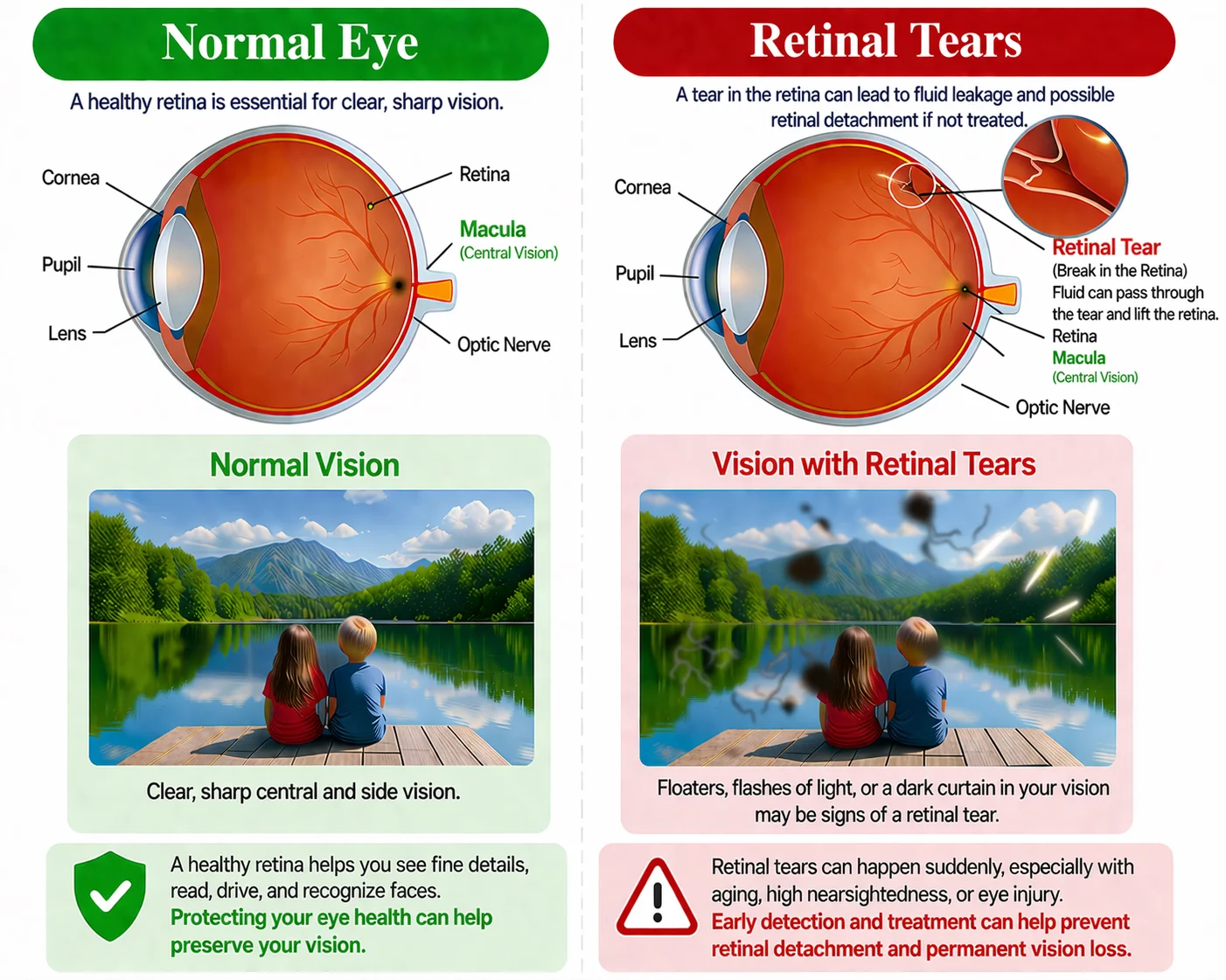
A retinal tear happens when the retina develops a small break or opening. The retina is the light-sensitive layer of tissue that lines the inside of the eye, and it is attached to the vitreous, the gel-like substance that fills most of the eye. As part of the normal aging process, the vitreous becomes thinner and changes shape. When it pulls away from the retina, it can sometimes create a tear. A retinal tear is important to treat promptly because, without treatment, fluid can pass through the tear and lead to a retinal detachment that threatens vision.
Learn more about Retinal Tears
Do I have Retinal Tears ?
Retinal tears usually do not cause pain, but they can cause sudden changes in vision that should never be ignored.
Symptoms of Retinal Tears
Symptoms can include, but are not limited to:
Flashes and floaters
You may notice flashing lights, new floaters, or a sudden increase in spots drifting through your vision.
Reduced vision
Some patients notice that vision becomes less clear or more difficult to trust in the affected eye.
Shadow or curtain in side vision
A dark shadow or curtain in the peripheral field of vision can be a warning sign that needs immediate attention.
Treatment of Retinal Tears
Treatment is focused on sealing the tear and lowering the risk of retinal detachment:
Laser treatment
Laser treatment can seal the retina around the tear and help keep fluid from passing underneath it.
Cryotherapy
Cryotherapy uses freezing treatment to seal the retina to the wall of the eye around the tear.
Ongoing retinal monitoring
Even after one tear is repaired, regular follow-up is important because a new tear can still develop elsewhere in the retina.

Whether you need a routine eye exam, upadet glasses or contacts, or help with an eye concert, our fiendly team is here to make the process easy.
- Personalized Care
- States-f-the-Art Equipment
- Experienced Optometrists
- Family-Friendly Environment

What causes Retinal Tears?
The most common cause of a retinal tear is age-related change in the vitreous gel. As the vitreous becomes thinner and changes shape, it can pull away from the retina in a posterior vitreous detachment. That pull is usually harmless, but sometimes it is strong enough to create a tear. Other possible causes include blunt trauma to the eye and complications from eye surgery. Patients who are nearsighted or who have a family history of retinal tears may also be at greater risk.
Getting a Diagnosis of Retinal Tears
A retinal tear is diagnosed during a thorough medical eye examination. The sooner the tear is found and treated, the less likely it is to progress into a retinal detachment.
Common tests used to diagnose a retinal tear include:
Dilated Eye Examination
The pupils are widened so your doctor can examine the retina carefully and look for a tear.
Retinal Imaging and Ultrasound
Ultrasound or retinal photography may be used to help evaluate the inside of the eye and document retinal findings.
Additional Eye Testing
Your doctor may also use visual acuity testing, slit-lamp examination, ophthalmoscopy, fluorescein angiography, or other retinal tests depending on your symptoms and the location of the tear.
Why prompt treatment of Retinal Tears matters
A retinal tear may seem small, but treating it early can make a major difference in protecting vision.
- Early treatment helps seal the tear before fluid has a chance to travel underneath the retina;
- Preventing retinal detachment is the main goal, since detachment can cause permanent vision loss if not treated quickly;
- Follow-up still matters because sealing one tear does not prevent a new tear from developing somewhere else in the retina.
Factors Increasing Risk of Retinal Tears
Some patients are more likely to develop a retinal tear than others.
Common risk factors for a retinal tear include:
- Age over 50
- Posterior vitreous detachment
- Nearsightedness
- Blunt trauma to the eye
- Complications of eye surgery
- Family history of retinal tears
Questions about Retinal Tears?
We’re here to help you take sudden flashes, floaters, and changes in vision seriously. Whether you need urgent evaluation for new symptoms or follow-up after treatment of a tear, our team is happy to help you take the next step toward protecting your sight.
A retinal tear is a small break in the retina, the light-sensitive tissue lining the inside of the eye. It often happens when the vitreous gel pulls away from the retina and creates enough traction to tear it.
Common symptoms include flashes of light, floaters, reduced vision, and a shadow or curtain in the peripheral field of vision. A retinal tear does not usually cause pain.
Retinal tears are usually treated with laser treatment, cryotherapy, or both. These procedures seal the retina to the wall of the eye and help prevent fluid from traveling through the tear and causing a retinal detachment.
Yes. Without treatment, fluid can move through a retinal tear and lift the retina away from the back of the eye, causing a retinal detachment that may result in permanent vision loss.