Infections
Learn about eye infection symptoms, causes, diagnosis, and treatment options, including pink eye, styes, warm compresses, and prescription eye drops.
Overview
Eye infections happen when harmful organisms such as bacteria, viruses, or fungi affect part of the eye or eyelid area. Depending on the type of infection, symptoms may stay mild and localized or become more painful, irritating, and disruptive to vision. Some infections affect the surface of the eye, while others involve the eyelids or surrounding tissues. In some cases only one eye is affected, while in others both eyes can become involved. Because different infections need different types of treatment, a proper eye exam is important when symptoms do not improve quickly or begin to worsen.
Learn more about Infections
Do I have Infections ?
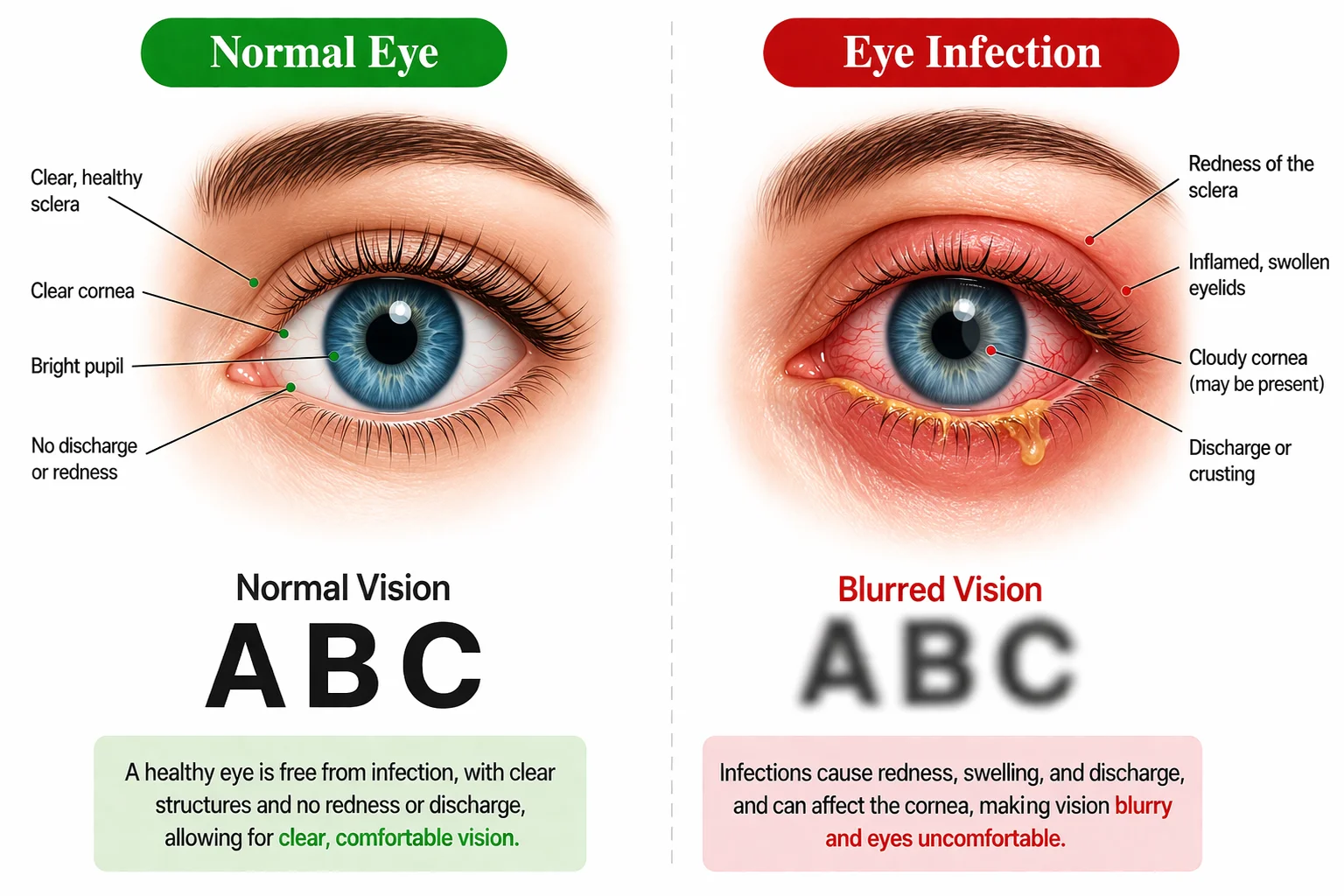
Eye infections can affect one eye or both, and symptoms may begin with irritation before progressing to redness, discharge, or changes in vision.
Symptoms of Infections
Symptoms can include, but are not limited to:
Red or itchy eyes
The eyes may look red, feel irritated, and become increasingly itchy or uncomfortable.
Pain, discharge, or swelling
Some infections cause pain, sticky drainage, or inflammation around the eye and eyelids.
Vision difficulties
Blurred vision or trouble seeing comfortably can happen when irritation and inflammation increase.
Treatment of Infections
Treatment depends on the cause of the infection and how severe the symptoms are:
Warm compresses and supportive care
Some mild infections improve with warm compresses, gentle care, and time.
Over-the-counter treatment
Certain symptoms may improve with appropriate over-the-counter care recommended by your doctor.
Antibiotic eye drops or prescription treatment
When the infection needs more targeted treatment, prescription medication such as antibiotic drops may be used.

Whether you need a routine eye exam, upadet glasses or contacts, or help with an eye concert, our fiendly team is here to make the process easy.
- Personalized Care
- States-f-the-Art Equipment
- Experienced Optometrists
- Family-Friendly Environment

What causes Infections?
Eye infections happen when harmful organisms reach the eye and begin multiplying in the tissues they affect. Depending on the infection, the source may be viral, fungal, or bacterial. Some infections involve the surface of the eye, while others affect the eyelids or nearby structures. Since different organisms behave differently, an accurate diagnosis helps guide which treatment is most likely to work well.
Getting a Diagnosis of Infections
Eye infections are diagnosed during a comprehensive eye examination. Your doctor will look at which part of the eye is involved, how much inflammation is present, and whether the symptoms are more consistent with a mild or more aggressive infection.
Common parts of the diagnostic process include:
External Eye Examination
Your doctor will inspect the eyelids, lashes, conjunctiva, and surrounding tissues for redness, swelling, discharge, and irritation.
Visual Evaluation
Vision may be checked to see whether the infection is affecting clarity or causing more significant visual difficulty.
Slit-Lamp Examination
A slit lamp can help your doctor get a closer look at the front of the eye and determine which tissues are involved.
Common types of Infections
Eye infections can affect different structures, but two of the most familiar types are infections of the conjunctiva and infections involving the eyelid margin.
- Conjunctivitis, also called pink eye, affects the conjunctiva and often makes the eye appear pink or red;
- Styes are small red bumps along the eyelid caused by bacterial infection of an eyelash hair follicle;
- Different infections affect different parts of the eye, which is why symptoms and treatment can vary from one patient to another.
Important care tips for Infections
When an eye infection is active, basic precautions can help reduce irritation and prevent the problem from lingering longer than it should.
Helpful care guidance can include:
- Avoid wearing makeup until the infection has cleared
- Do not wear contact lenses while the eye is still infected
- Use warm compresses if recommended by your doctor
- Follow medication instructions carefully if eye drops are prescribed
- Schedule follow-up care if symptoms are not improving
Questions about Infections?
We’re here to help you get relief from red, irritated, painful, or draining eyes and make sure the right treatment is started when needed. Whether your symptoms are mild or worsening, our team is happy to help you take the next step toward clearer, more comfortable eyes.
Eye infections can happen when a virus, fungus, or bacterium affects part of the eye. Depending on the type of infection, one eye or both eyes may become involved.
Common symptoms can include red eyes, itchy eyes, pain, discharge, inflammation around the eye area, and vision difficulties. Symptoms vary depending on which part of the eye is infected.
Two of the most common eye infections are conjunctivitis, also called pink eye, and styes. Conjunctivitis affects the conjunctiva and often gives the eye a pink or red appearance, while styes are red bumps along the eyelid caused by infection of an eyelash hair follicle.
Treatment depends on the cause. Some infections go away on their own, while others may need warm compresses, over-the-counter medication, or antibiotic eye drops. Patients should avoid wearing makeup or contact lenses until the infection has resolved.