Central Serous Chorioretinopathy
Learn about central serous chorioretinopathy, including symptoms, causes, risk factors, and treatment options for fluid under the retina.
Overview
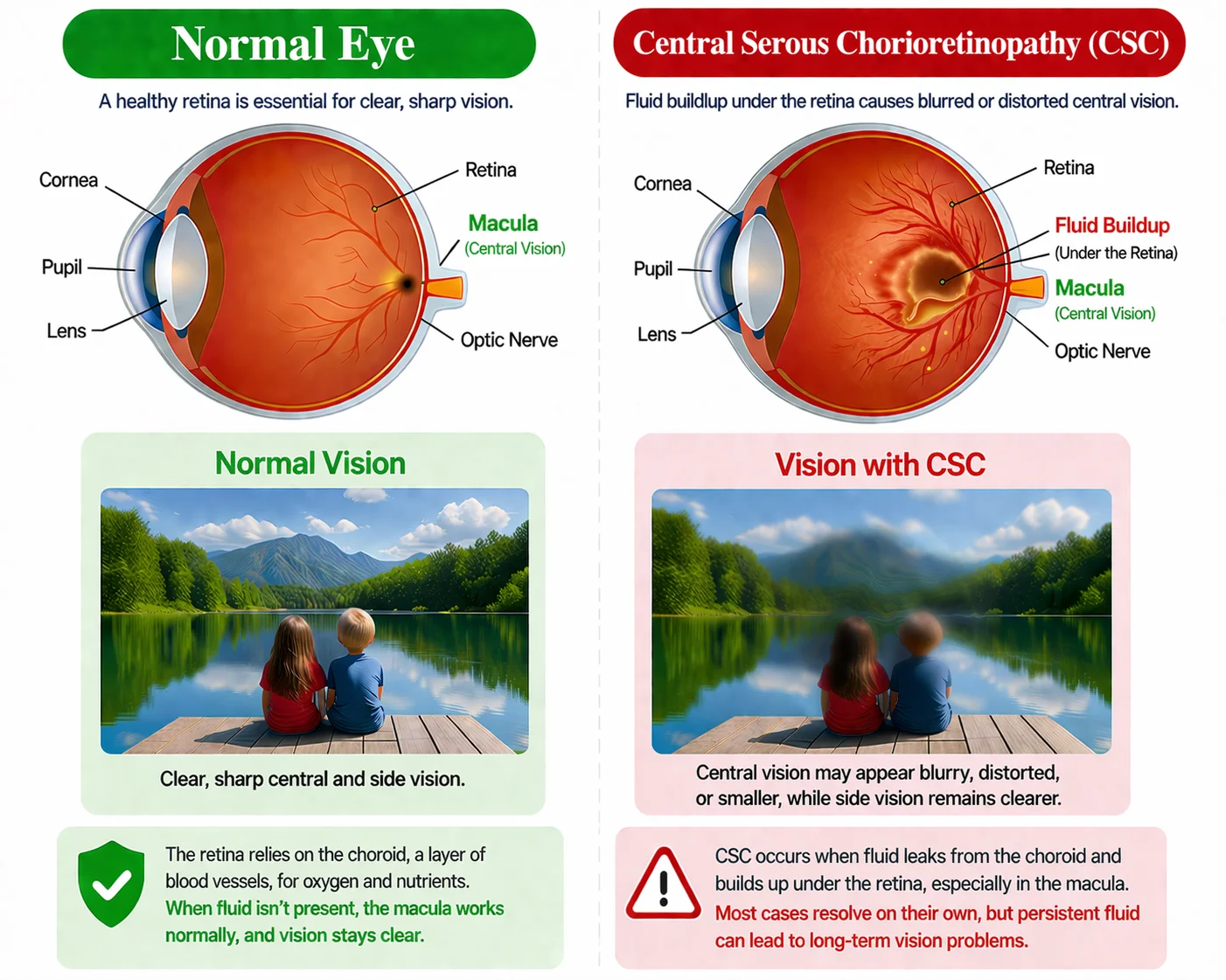
Central serous chorioretinopathy, also called CSR or CSC, is an eye condition that develops when fluid builds up underneath the retina. That fluid leaks from the choroid, the blood-vessel layer beneath the retina, and lifts the retina enough to affect how clearly you see. CSR usually affects one eye at a time, although both eyes can be involved. It is seen more often in men between their 30s and 50s, but it can affect other patients as well. Many cases improve on their own, but careful monitoring is important because the condition can interfere with reading, driving, and other daily activities while it is active.
Learn more about Central Serous Chorioretinopathy
Do I have Central Serous Chorioretinopathy ?
CSR can change the way central vision looks even though the eye may not be painful.
Symptoms of Central Serous Chorioretinopathy
Symptoms can include, but are not limited to:
Blurred or dimmed vision
Vision may seem less sharp, hazy, or dim in the affected eye.
Blind spots
Some patients notice a missing area in central vision.
Distorted shapes or reduced depth perception
Objects may look warped or less clear, and judging depth may become harder.
Treatment of Central Serous Chorioretinopathy
Treatment depends on whether the fluid is resolving on its own or continuing to threaten vision:
Observation and follow-up
Most cases improve without treatment over one to two months, but the retina still needs to be monitored closely.
Laser treatment
If leakage persists or complications develop, laser may be used to help seal the source of leakage.
Monitoring for recurrence
Because CSR can come back, continued retinal follow-up is an important part of care.

Whether you need a routine eye exam, upadet glasses or contacts, or help with an eye concert, our fiendly team is here to make the process easy.
- Personalized Care
- States-f-the-Art Equipment
- Experienced Optometrists
- Family-Friendly Environment

What causes Central Serous Chorioretinopathy?
The exact cause of CSR is unknown. It is believed that certain treatments, medical conditions, and lifestyle factors may trigger it in patients who are susceptible. Reported triggers and associations include high stress, steroid medication, pregnancy, excessive caffeine use, “type A” personality traits, nasal allergies, asthma, and high blood pressure. Because these factors can overlap, your doctor may review your general health, medications, and recent stress levels when evaluating the condition.
Getting a Diagnosis of Central Serous Chorioretinopathy
CSR is typically diagnosed during a detailed retinal evaluation. Your eye doctor will look for fluid under the retina and monitor how it affects central vision over time.
Common parts of the diagnostic process can include:
Dilated Retinal Exam
Eye drops are used to widen the pupil so your doctor can examine the retina and look for fluid-related changes.
Retinal Imaging
Photos or scans may be used to document the amount of fluid and help monitor whether it is resolving.
Follow-Up Monitoring
Because many cases improve on their own, repeat exams are often important to be sure the fluid is reabsorbing and that complications are not developing.
How Central Serous Chorioretinopathy behaves
CSR can behave differently from one patient to another, which is why follow-up matters even when symptoms begin to improve.
- Short-term CSR often improves on its own over a period of one to two months without treatment;
- Complicated or persistent CSR may require laser treatment if the fluid does not resolve or if vision remains threatened;
- Recurrent CSR is common, and more than half of patients may have the condition return at some point.
Factors Increasing Risk of Central Serous Chorioretinopathy
While the cause is not fully understood, some factors are commonly associated with CSR.
Possible triggers and associated risk factors include:
- Male sex, especially ages 30 to 50
- High stress or a high-pressure lifestyle
- Steroid medication
- Pregnancy
- Excessive caffeine use
- “Type A” personality traits
- Nasal allergies
- Asthma
- High blood pressure
Questions about Central Serous Chorioretinopathy?
We’re here to help you understand CSR clearly and monitor the fluid changes affecting your retina. Whether you have new blurred vision, distortion, or have already been diagnosed with central serous chorioretinopathy, our team is happy to help you take the next step toward protecting your sight.
Central serous chorioretinopathy, also called CSR or CSC, is a condition in which fluid leaks from the choroid and builds up underneath the retina. That fluid can temporarily disturb the way light is focused and change central vision.
Common symptoms include blurred or dimmed vision, blind spots, distorted shapes, decreased visual sharpness, and reduced depth perception. Symptoms often affect one eye more noticeably, even though both eyes can sometimes be involved.
In many cases, yes. CSR often improves on its own over one to two months without treatment, but the retina still needs to be monitored to make sure the fluid is being reabsorbed and vision is staying protected.
Most patients are monitored closely at first because the condition often improves without treatment. If complications develop or leakage persists, laser treatment may be recommended to help prevent more lasting vision loss.