Graves’ Eye Disease
Learn about Graves’ eye disease, including symptoms, causes, diagnosis, risk factors, and treatment options for thyroid eye disease.
Overview
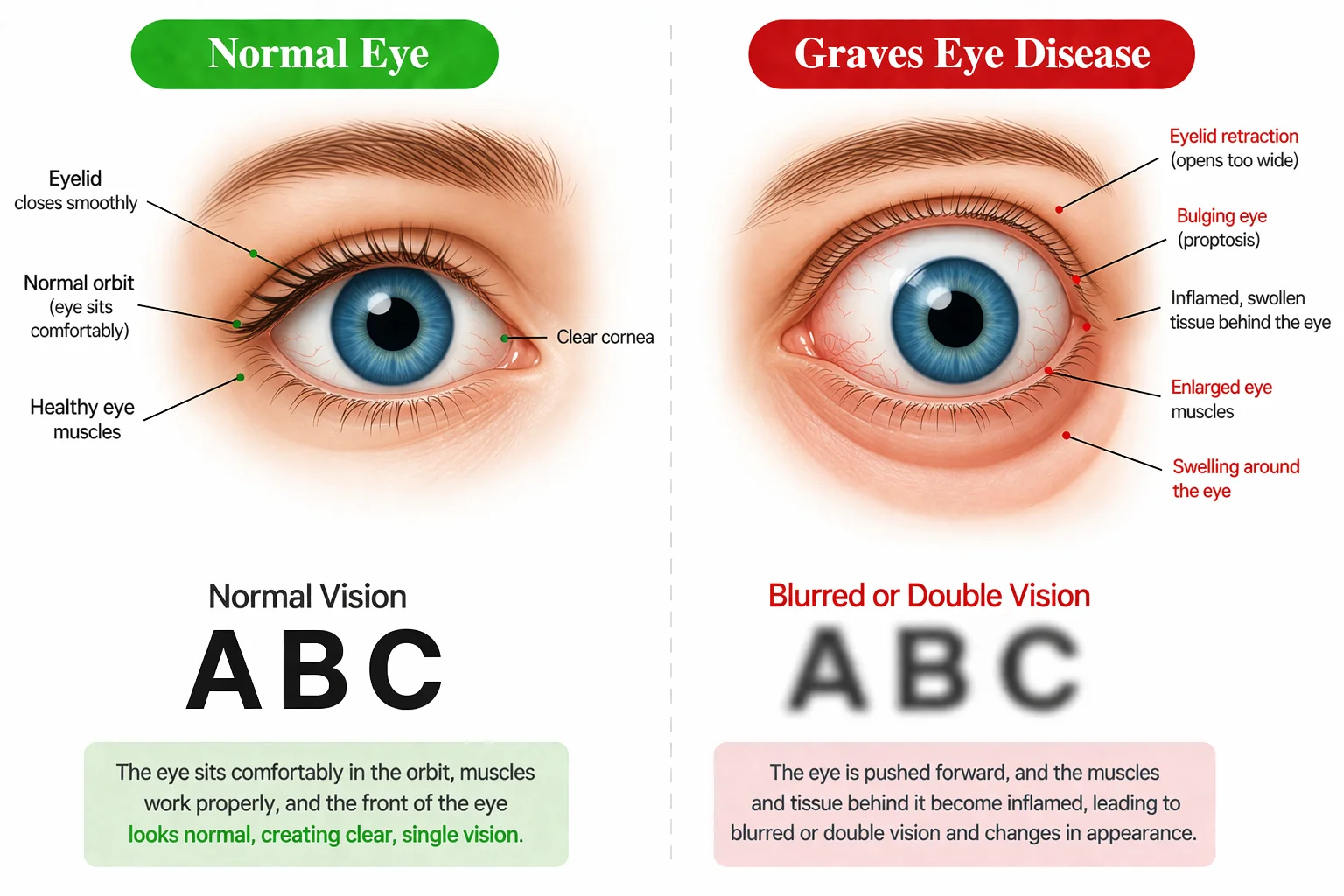
Graves’ eye disease, also called thyroid eye disease or TED, is an autoimmune condition that affects the tissues and muscles around the eyes. It is associated with thyroid disease, especially Graves’ disease, but the eye condition and the thyroid condition do not always improve at the same time or progress in exactly the same way. When inflammation develops around the eyes, the muscles and soft tissues can swell, leading to bulging eyes, pressure, dryness, irritation, and sometimes double vision. In rare cases, severe swelling can threaten vision by putting pressure on the optic nerve or exposing the cornea when the eyelids do not close fully.
Learn more about Graves’ Eye Disease
Do I have Graves’ Eye Disease ?
Thyroid eye disease often affects both eyes, but symptoms may seem more noticeable in one eye than the other.
Symptoms of Graves’ Eye Disease
Symptoms can include, but are not limited to:
Bulging eyes
One of the most recognized signs of Graves’ eye disease is forward bulging of the eyes, also called proptosis.
Dryness, puffiness, and light sensitivity
The eyes may feel dry, irritated, pressured, puffy, or more sensitive to light.
Double vision or trouble moving the eyes
Swollen eye muscles can make it harder to move the eyes normally and may cause double vision.
Treatment of Graves’ Eye Disease
Treatment depends on the severity of symptoms and how much the eyes are being affected:
Artificial tears and comfort care
OTC lubricating drops, sunglasses, and nighttime eyelid protection may help ease dryness and irritation.
Medication and symptom relief
Steroids or other medicines may be used when there is more significant swelling, and special glasses may help with double vision.
Surgery or radiation in select cases
More severe cases may require orbital decompression surgery, and radiation is sometimes used in rare situations.

Whether you need a routine eye exam, upadet glasses or contacts, or help with an eye concert, our fiendly team is here to make the process easy.
- Personalized Care
- States-f-the-Art Equipment
- Experienced Optometrists
- Family-Friendly Environment

What causes Graves’ Eye Disease?
Graves’ eye disease is caused by an autoimmune response that triggers inflammation in the tissues around the eyes. The immune system attacks the muscles and other soft tissues within the eye socket, causing swelling and enlargement. This can push the eyes forward, make it harder for the eyelids to close fully, and interfere with how the eye muscles move together. In more severe cases, the cornea may become exposed and the optic nerve may come under pressure, which is why careful monitoring is important when symptoms are more intense.
Getting a Diagnosis of Graves’ Eye Disease
Graves’ eye disease is diagnosed during a comprehensive eye exam. Your doctor will look at the position of the eyes and eyelids, evaluate how well the eyes move, and look for swelling or enlargement of the tissues and muscles around the eyes.
Common parts of the diagnostic process include:
Eye Examination
Your doctor will examine the eyes, eyelids, and surrounding tissues for bulging, swelling, irritation, and exposure-related problems.
Eye Movement Testing
Because TED can affect the eye muscles, your doctor may check how the eyes move together and whether muscle stiffness is causing double vision.
Comprehensive Evaluation
Your doctor may also review your thyroid history, current symptoms, and the severity of inflammation to determine which treatment approach is most appropriate.
How Graves’ Eye Disease affects the eyes
Thyroid eye disease can affect the eyes in more than one way, and symptoms can range from mild irritation to more serious functional problems.
- Surface irritation may cause dry eyes, redness, discomfort, and corneal exposure when the eyelids do not close all the way;
- Cosmetic and structural changes can include bulging eyes, eyelid retraction, and puffiness around the eyes;
- Muscle-related problems can cause stiffness, difficulty moving the eyes normally, and double vision;
- Vision-threatening disease is rare, but severe swelling can put pressure on the optic nerve and threaten sight if not treated promptly.
Factors Increasing Risk of Graves’ Eye Disease
If you have Graves’ disease, you are at risk for Graves’ eye disease, but some factors increase that risk more than others.
Common risk factors for Graves’ eye disease include:
- Having Graves’ disease
- Smoking
- Family history of Graves’ disease
- Being female
- Developing Graves’ disease at a younger age
Questions about Graves’ Eye Disease?
We’re here to help you understand thyroid eye disease clearly and guide you toward the treatment that best fits your symptoms. Whether you are dealing with dryness, double vision, bulging eyes, or pressure around the eyes, our team is happy to help you take the next step toward relief and protection of your vision.
Graves’ eye disease, also called thyroid eye disease, is an autoimmune condition that causes inflammation and swelling in the tissues and muscles around the eyes. It is associated with thyroid disease, especially Graves’ disease, but the eye condition and thyroid condition do not always behave the same way.
Common symptoms include bulging eyes, dry or irritated eyes, puffy eyelids, eyelids that do not close completely, double vision, light sensitivity, eye pain or pressure, and trouble moving the eyes normally.
Many patients improve over time, and mild to moderate cases may settle down over a period of years. Treatment is focused on protecting the eyes, easing symptoms, reducing inflammation, and managing more serious complications when they occur.
Treatment may include artificial tears, LipiFlow, steroids or other medicines for swelling, lifestyle changes like quitting smoking and protecting the eyes, special glasses for double vision, orbital decompression surgery, and in rare cases radiation treatment.