Corneal Eye Disease
Learn about corneal eye disease, including symptoms, causes, diagnosis, and treatment options for conditions affecting the cornea and external surface of the eye.
Overview
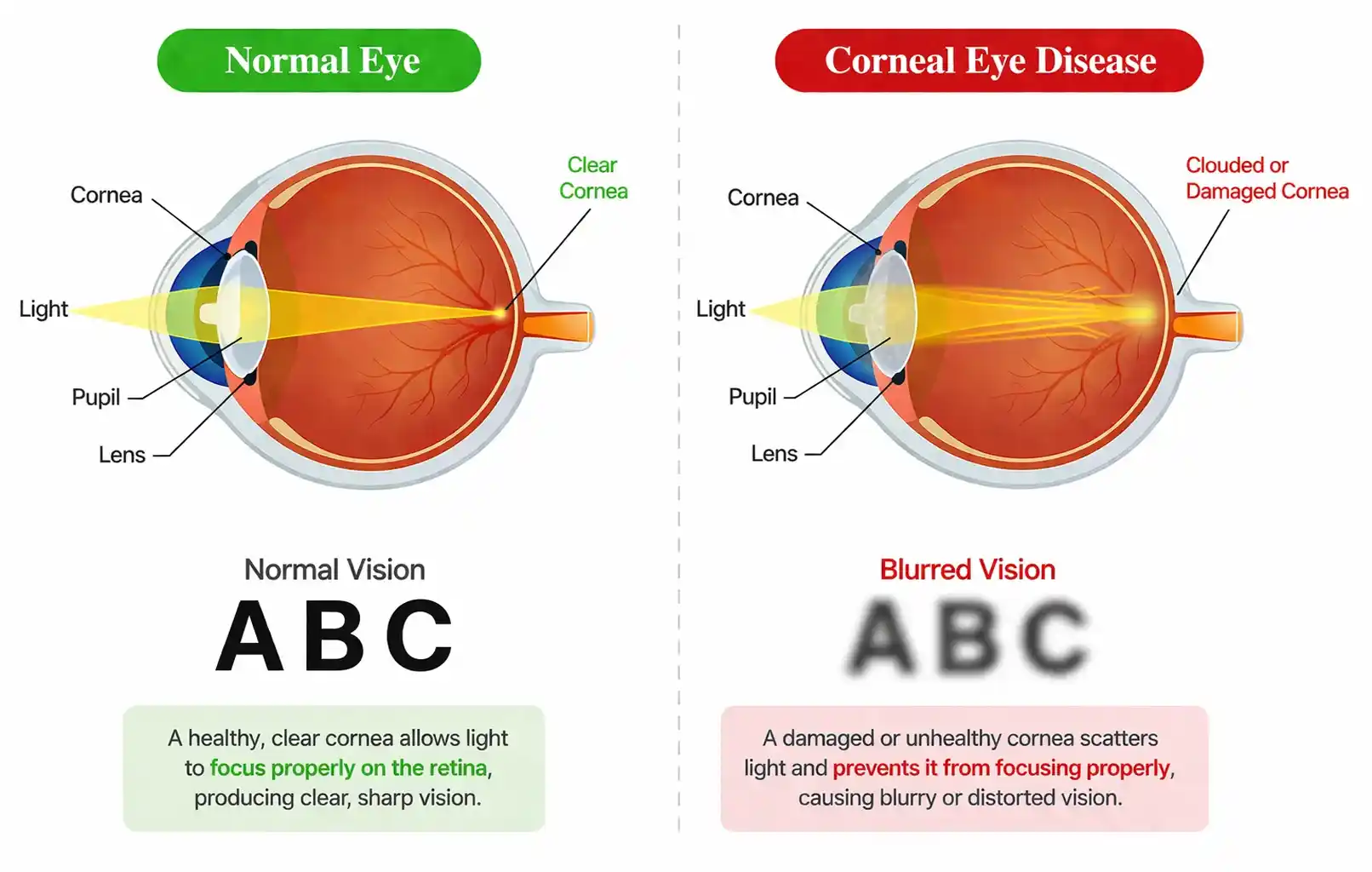
Corneal eye disease is a broad term used for conditions that affect the cornea and the external surface of the eye. The cornea is the clear, dome-shaped front window of the eye. It helps protect the eye from outside irritants and also plays a major role in focusing light so you can see clearly. When the cornea becomes irritated, injured, infected, swollen, scarred, or misshapen, vision can become blurry, uncomfortable, and more sensitive to light. Because corneal conditions can range from mild surface irritation to more serious disease, early diagnosis and the right treatment plan are important for protecting both comfort and vision.
Learn more about Corneal Eye Disease
Do I have Corneal Eye Disease ?
Corneal and external eye problems can affect both comfort and vision, and symptoms often overlap from one condition to another.
Symptoms of Corneal Eye Disease
Symptoms can include, but are not limited to:
Eye pain or irritation
The eye may feel sore, scratchy, burning, stinging, or as if something is stuck in it.
Blurred or distorted vision
Corneal problems can interfere with the way light enters the eye and make vision look cloudy, hazy, or distorted.
Redness, tearing, discharge, or light sensitivity
You may notice watery eyes, itching, discharge, poor night vision, or increased sensitivity to light.
Treatment of Corneal Eye Disease
Treatment options depend on the exact condition involved:
Eye drops or medication
Artificial tears, prescription drops, or anti-infective medications may be used depending on the cause.
Specialty lenses or in-office procedures
Some patients benefit from custom contact lenses, cross-linking, or laser treatment of the corneal surface.
Corneal surgery or transplant
More advanced disease may require PTK, transplant surgery, or another corneal procedure to restore clarity.

Whether you need a routine eye exam, upadet glasses or contacts, or help with an eye concert, our fiendly team is here to make the process easy.
- Personalized Care
- States-f-the-Art Equipment
- Experienced Optometrists
- Family-Friendly Environment

What causes Corneal Eye Disease?
Corneal and external eye diseases can develop for many different reasons. Some happen because of infection, inflammation, trauma, allergies, or poor tear quality. Others are inherited or linked to progressive structural changes in the cornea. In some cases, a corneal problem may also appear after prior eye surgery or from long-term exposure to sun, chemicals, or other irritants. Because the causes vary so much, a careful exam is important before choosing treatment.
Getting a Diagnosis of Corneal Eye Disease
Corneal eye disease is diagnosed with a detailed eye exam focused on the front surface of the eye. Your doctor will look at the cornea itself, assess its shape and thickness when needed, and evaluate how much the condition is affecting your vision and comfort.
Common tests used to diagnose corneal eye disease include:
Slit Lamp Examination
This gives your doctor a magnified, detailed view of the structures at the front of the eye, including the cornea, eyelids, tear film, and ocular surface.
Corneal Topography or Tomography
These imaging tests create a map of the cornea to measure curvature, shape, and in some cases thickness, which can be helpful in conditions such as keratoconus or ectasia.
Pachymetry and Keratometry
Pachymetry measures corneal thickness, while keratometry measures the curvature of the front surface of the cornea to help guide diagnosis and treatment.
Different types of Corneal Eye Disease
Corneal eye disease includes many different conditions, ranging from surface irritation to structural disease of the cornea itself.
- Surface and inflammatory conditions can include allergies, dry eye, blepharitis, and conjunctivitis;
- Infectious corneal disease may be caused by bacteria, viruses, fungi, or injury-related contamination;
- Structural and inherited corneal disease can include keratoconus, corneal dystrophies, Fuchs’ dystrophy, and ectasia;
- Traumatic and UV-related conditions can include abrasions, deeper injuries, and photokeratitis;
- Growths and surface changes may include problems such as pterygium or corneal scarring.
Factors Increasing Risk of Corneal Eye Disease
Risk factors depend on the exact condition, but some patterns are seen across many corneal and external eye diseases.
Common risk factors can include:
- Eye injury or trauma
- Contact lens misuse or contamination
- Infection from bacteria, viruses, fungi, or parasites
- Family history of inherited corneal disease
- Allergic reactions or chronic eyelid inflammation
- Too much sun or UV exposure
- Certain systemic or connective tissue disorders
- Previous refractive surgery or other eye procedures in some cases
Questions about Corneal Eye Disease?
We’re here to help you understand what is affecting the front surface of your eye and what can be done to treat it. Whether you are dealing with irritation, blurred vision, a corneal injury, or a more advanced corneal condition, our team is happy to guide you through your options and the next steps toward healthier, clearer vision.
The cornea is the clear, dome-shaped surface at the front of the eye. It helps protect the eye from the outside environment and also bends incoming light so it can be focused properly for clear vision.
Common symptoms can include eye pain, irritation, redness, tearing, discharge, blurred or distorted vision, light sensitivity, a foreign-body sensation, poor night vision, and in some cases a cloudy-looking cornea.
Treatment depends on the exact diagnosis and can include artificial tears, prescription medications, specialty contact lenses, corneal cross-linking, PTK, or corneal transplant surgery. Some patients with advanced disease may need a more specialized surgical approach.
Not every corneal condition can be prevented, but risk may be lowered by protecting the eyes from injury, using good contact lens hygiene, avoiding shared eye products, washing your hands regularly, and limiting exposure to known irritants or contagious eye infections.