Glaucoma
Learn about glaucoma, including symptoms, causes, diagnosis, risk factors, and treatment options like drops, laser therapy, and glaucoma surgery.
Overview
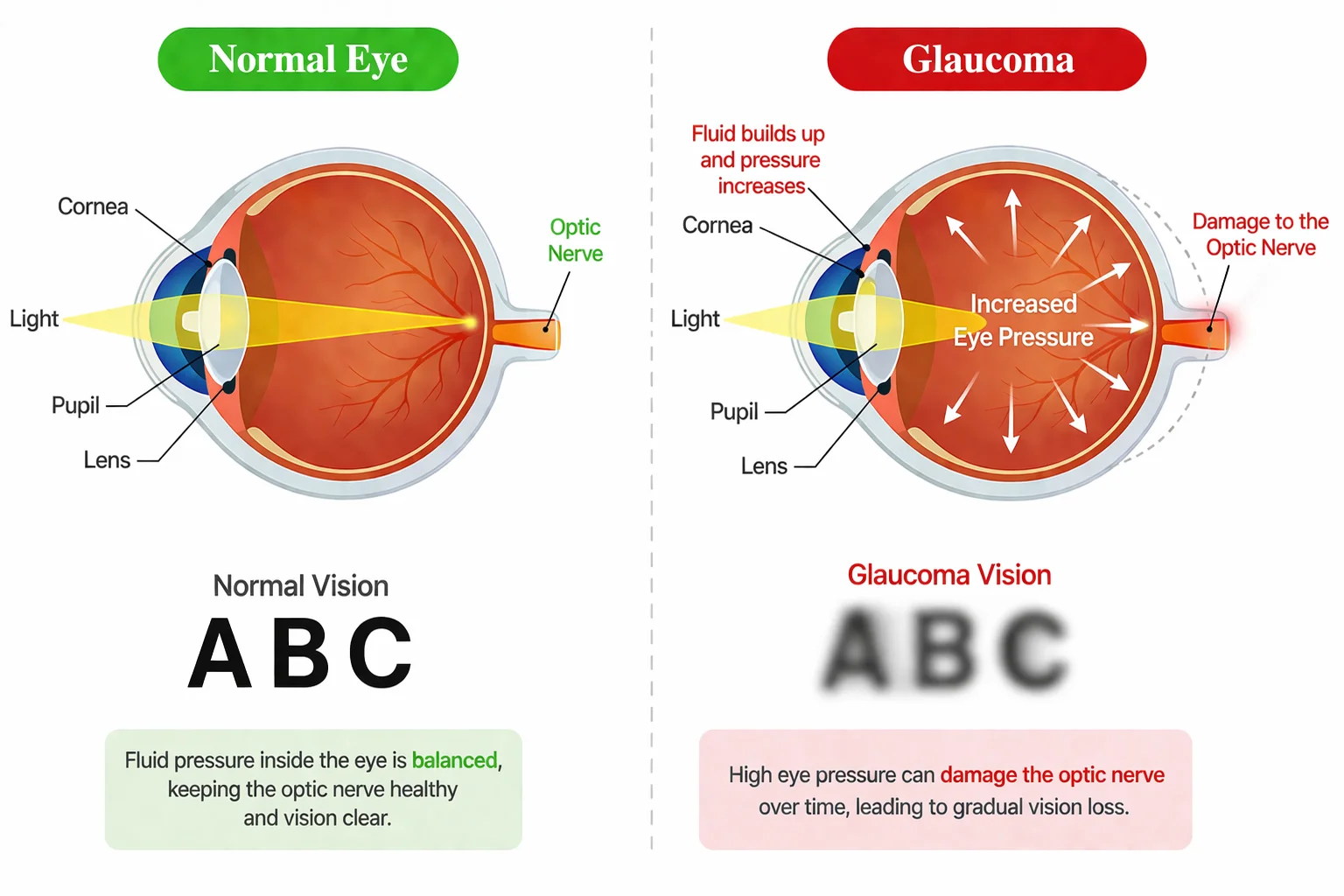
Glaucoma is a group of eye diseases that damage the optic nerve, which is responsible for sending visual information from the eye to the brain. In many cases, this damage is related to increased pressure inside the eye, although glaucoma can also occur when eye pressure is in the normal range. One of the biggest challenges with glaucoma is that it often develops slowly and without noticeable symptoms at first. When found early and treated appropriately, it may be possible to slow or prevent further vision loss with medications, laser treatment, or surgery.
Learn more about Glaucoma
Do I have Glaucoma ?
Glaucoma often develops quietly, which is why regular eye exams are so important for early detection.
Symptoms of Glaucoma
Symptoms can include, but are not limited to:
No early symptoms
Many people with glaucoma do not notice vision changes in the early stages.
Peripheral vision loss
Open-angle glaucoma often affects side vision before central vision.
Sudden pain or blurred vision
Angle-closure glaucoma can cause severe eye pain, headache, nausea, and sudden blurred vision and needs urgent care.
Treatment of Glaucoma
Treatments can include, but are not limited to:
Eye drops or medication
Pressure-lowering drops are often the first step and may be used long term to help protect the optic nerve.
Laser treatment
Laser procedures may help improve fluid drainage and lower pressure in the eye.
MIGS or glaucoma surgery
When medications or laser are not enough, surgery can create better drainage and reduce eye pressure.

Whether you need a routine eye exam, upadet glasses or contacts, or help with an eye concert, our fiendly team is here to make the process easy.
- Personalized Care
- States-f-the-Art Equipment
- Experienced Optometrists
- Family-Friendly Environment

What causes Glaucoma?
Glaucoma is often related to problems with the way fluid drains from the eye. The eye is constantly producing and draining a clear fluid called aqueous humor. When that drainage slows down, becomes blocked, or the eye produces more fluid than it can clear, pressure can build inside the eye and damage the optic nerve. Glaucoma may also be associated with normal eye pressure, family history, eye injury, inflammation, steroid use, or other eye and health conditions.
Getting a Diagnosis of Glaucoma
Glaucoma is typically diagnosed during a comprehensive eye exam. Because early glaucoma often has no warning signs, routine visits are important for finding optic nerve damage before noticeable vision loss occurs.
Common tests used to diagnose glaucoma include:
Tonometry
Tonometry measures the pressure inside the eye. This helps your doctor see whether elevated eye pressure may be contributing to optic nerve damage.
Dilated Eye Exam
Your doctor may dilate your pupils with eye drops to get a better view of the optic nerve and look for signs of glaucoma damage.
Comprehensive Eye Exam
A full glaucoma workup may include checking your overall eye health, reviewing your risk factors, and evaluating how well your eyes are functioning over time.
Different types of Glaucoma
There are several forms of glaucoma, and each affects the eye in a slightly different way. Knowing the type of glaucoma you have helps guide treatment and urgency.
- Open-angle glaucoma is the most common type and usually develops slowly as the eye’s drainage system becomes less effective over time;
- Angle-closure glaucoma is less common but more dangerous because eye pressure can rise suddenly and requires immediate treatment;
- Normal-tension glaucoma causes optic nerve damage even though eye pressure readings may fall within the normal range;
- Congenital glaucoma is present in children born with a drainage problem in the eye;
- Secondary glaucoma can develop because of another disease, inflammation, steroid use, or complications from other eye conditions or treatments.
Factors Increasing Risk of Glaucoma
Everyone can develop glaucoma, but some people have a higher risk than others. A good family history and regular eye exams become especially important if any of the following apply to you.
Common risk factors for glaucoma include:
- Age over 60
- Family history of glaucoma
- African American race
- Hispanic or Latino background
- Diabetes or high blood pressure
- Already elevated eye pressure
- Regular steroid medication use
- Nearsightedness or farsightedness
Questions about Glaucoma?
We’re here to help protect your vision with thorough exams, early detection, and treatment plans tailored to your eyes. If you have questions about glaucoma, your risk factors, or what to expect during testing and treatment, our team is happy to help. Reach out today to schedule an evaluation.
Glaucoma is a group of eye diseases that damage the optic nerve. In many patients, this damage is related to increased pressure inside the eye, although glaucoma can also occur with normal pressure.
Often, early glaucoma does not cause obvious symptoms. Open-angle glaucoma may slowly reduce side vision without you noticing, while angle-closure glaucoma can cause severe eye pain, headache, nausea, blurred vision, and sudden vision changes that need immediate medical attention.
There is no cure for glaucoma, but it can often be controlled with proper treatment and follow-up care. The goal is to lower eye pressure or otherwise protect the optic nerve to help prevent additional vision loss.
Glaucoma is commonly treated with prescription eye drops, oral medication in some cases, laser treatment, or surgery. Your eye doctor will recommend the best approach based on the type of glaucoma you have and how well your eye pressure is responding.