Astigmatism
Learn what astigmatism is, what causes blurry or distorted vision, and how Lake Worth Eye Care can diagnose and treat it with personalized eye care.
Overview
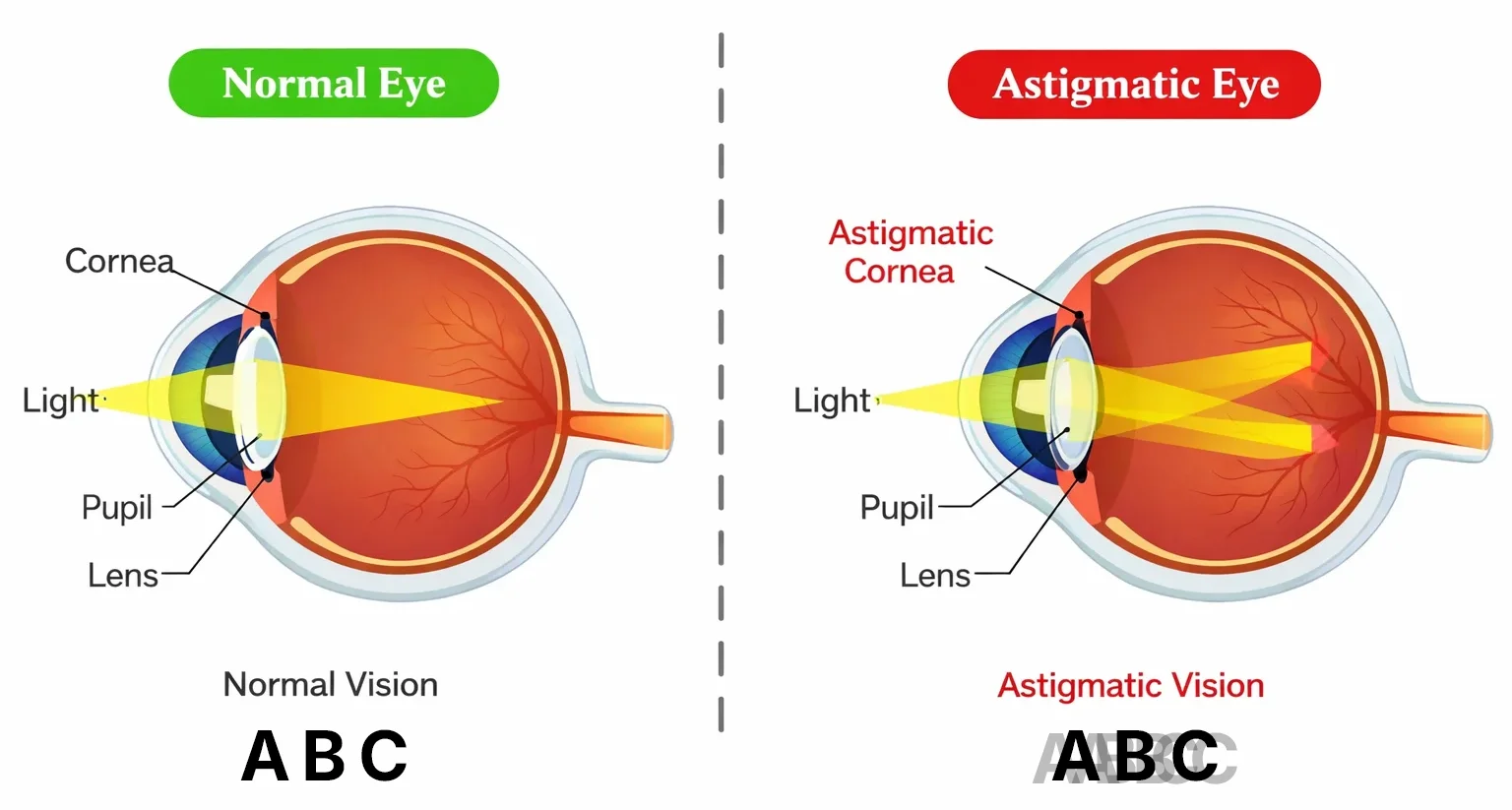
Astigmatism is a very common vision problem that happens when the front of the eye, called the cornea, or sometimes the lens inside the eye, is not perfectly round. Instead of bending light evenly to one sharp point, the eye bends light unevenly, so vision can look blurry, stretched, shadowed, or slightly doubled at both distance and near. Many people are born with some amount of astigmatism, and it can often be corrected with glasses, contact lenses, or other treatment options recommended by an eye doctor.
Learn more about Astigmatism
Do I have Astigmatism ?
Astigmatism is a very common vision problem that happens when the front of the eye, called the cornea, or sometimes the lens inside the eye, is not perfectly round.
Symptoms of Astigmatism
Symptoms can include, but are not limited to:
Blurred vision
Vision may appear soft, stretched, or doubled at distance and near.
Eye strain
Your eyes may feel tired or uncomfortable after reading, driving, or screen time.
Headaches
Frequent focusing effort and squinting can sometimes lead to headaches.
Treatment of Astigmatism
Treatments can include, but are not limited to:
Eyeglasses
Prescription lenses can correct how light enters the eye and improve clarity.
Contact lenses
Specialized contact lenses can help reduce blur and distortion.
LASIK or PRK
Some patients may be candidates for laser vision correction procedures.

Whether you need a routine eye exam, upadet glasses or contacts, or help with an eye concert, our fiendly team is here to make the process easy.
- Personalized Care
- States-f-the-Art Equipment
- Experienced Optometrists
- Family-Friendly Environment

What causes Astigmatism?
Astigmatism can develop slowly and almost unnoticeably in some people, and in others it may progress more quickly and severely as they age. Astigmatism is caused by an irregular shape of the cornea or the lens of the eye. For optimal vision, light needs to enter the eye and fall on the retina in a single focal point. When you have an astigmatism, the light will fall in two separate spots, creating two focal points and causing blurred vision and distortion of images.
Getting a Diagnosis of Astigmatism
Astigmatism is typically diagnosed during a comprehensive eye exam. During your visit, your eye doctor will perform several tests to evaluate your vision, measure the shape of your eye, and determine the most effective treatment options.
Common tests used to diagnose astigmatism include:
Visual Acuity Test
A visual acuity test measures how clearly you can see details at a distance. During this exam, you will be asked to read letters on an eye chart so your doctor can assess how well your eyes distinguish shapes and images from far away.
Refraction Test
A refraction test helps determine the lens prescription needed to sharpen your vision. Your eye doctor will place different lens options in front of your eyes to see which ones provide the clearest, most comfortable vision.
Keratometry
Keratometry measures the curve of the cornea, which plays an important role in diagnosing astigmatism. This test allows your eye doctor to evaluate the shape of the front surface of the eye and determine the degree of irregular curvature present.
Different types of Astigmatism
Astigmatism can be present along with farsighted vision and nearsighted vision. When an individual has nearsighted astigmatism, light is focused in front of the retina resulting in blurred vision for objects that are far away. This combined with the irregular or, football shape of an astigmatic cornea, will cause further blurriness and distortion. In individuals with farsighted astigmatism, the light entering the eye focuses behind the retina causing near objects to look blurry. When combined with the irregular shape of an astigmatic cornea, vision will be very blurry and distorted.
- Hyperopic astigmatism occurs in individuals that are farsighted, and also have an astigmatic refractive error;
- Myopic astigmatism occurs in individuals that are nearsighted, and also have an astigmatic refractive error;
- Mixed astigmatism is astigmatism in an eye that is both nearsighted and farsighted, light hits both in front of and behind the retina.
Factors Increasing Risk of Astigmatism
Astigmatism is a very common vision condition, but some people are more likely to develop it than others. Genetics can play a major role, so be sure to tell your eye doctor if astigmatism runs in your family. Your risk may also be higher if you already have another refractive error or certain eye-related health factors.
Common risk factors for astigmatism include:
- Family history of astigmatism
- Significant nearsightedness (myopia)
- Significant farsightedness (hyperopia)
- Smoking during pregnancy
- Hispanic or Black ethnicity
- Eye injury or trauma
- Previous eye surgery, including cataract surgery
Questions about Astigmatism?
We’re here to make your visit feel simple, comfortable, and stress-free. Whether you have questions about blurred vision, treatment options, or what to expect during your appointment, our team is happy to help. Reach out today and let us help you take the next step toward clearer, more comfortable vision.
Astigmatism is a common refractive error that happens when the cornea or lens has an irregular shape. Instead of focusing light evenly on the retina, the eye bends light unevenly, which can cause blurred or distorted vision at both near and far distances.
Common astigmatism symptoms include blurry vision, distorted vision, eye strain, squinting, headaches, and trouble seeing clearly at night. Some people have only mild symptoms, while others notice more significant vision changes during reading, driving, or screen time.
Yes, astigmatism can change over time. In some patients it stays relatively stable, while in others it may gradually worsen as the eyes change with age or due to other vision conditions. Regular eye exams are the best way to monitor your prescription and eye health.
Astigmatism is often treated with eyeglasses, contact lenses, or refractive surgery, depending on your vision needs and overall eye health. During your exam, your eye doctor can recommend the best option to help you see more clearly and comfortably.